






Vice-President J. D. Vance delivered a slap to Israeli Prime Minister Benjamin Netanyahu a day after President Donald Trump signed a Memorandum of Understanding (MoU) with Iran in France’s glamorous Versailles Palace.
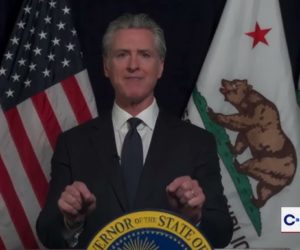
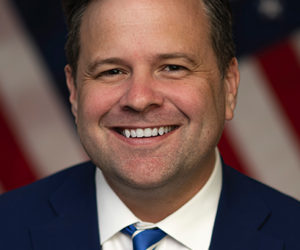
Speaking to White House reporters, Vance declared: “Donald J. Trump is the only head of state in the entire world who is sympathetic to the nation of Israel at this moment. If I was in the cabinet of the Israeli government, I might not be attacking the only powerful ally that I have anywhere left in the entire world.”
This sudden insult to Netanyahu, who has long been joined at the hip to Trump and favored by every US president for over three decades, tells many world leaders that fully trusting Washington can be perilous. Trump’s ire is understandable because Netanyahu manipulated him into a war in which the mighty American military machine was brought to an inglorious stalemate in just 108 days by a regime that is barely able to stand upright.
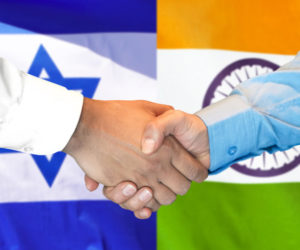
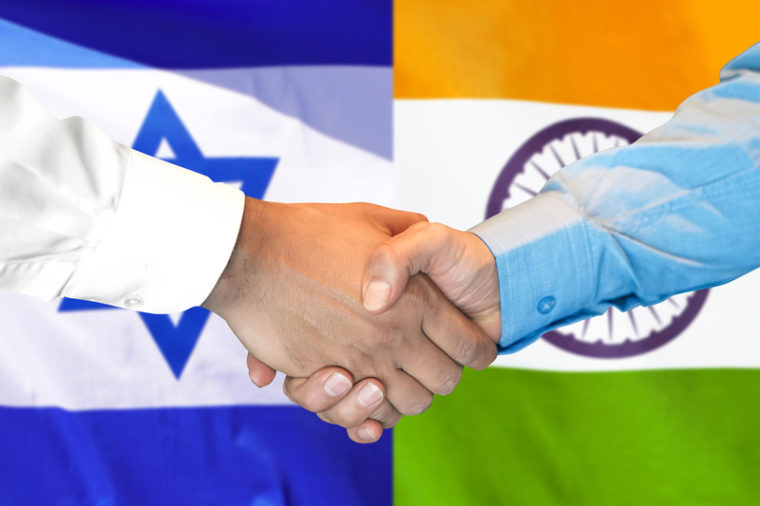
But Vance’s outburst is not quite accurate. Netanyahu and Israelis have a steadfast friend in Indian Prime Minister Narendra Modi. On February 25, just before the February 28 Iran war, he became the only Indian leader to address the Knesset and was awarded the ‘Speaker of the Knesset Medal’, its highest honor. During a 2017 visit, he had declared: “I for I. Which means India for Israel and Israel for India!”
India openly champions its ties with Israel because both strongmen firmly emphasize national identity, cultural sovereignty, zero-tolerance for terrorism and uncompromising national security. India provides significant military-industrial support to Israel as a critical manufacturing and supply chain partner for the Israel Defense Forces (IDF). Importantly, Delhi provides a scalable production hub for Israeli arms makers, geographical space for long range missile and interceptor testing, and resources for deep intelligence and cyber cooperation.
At the Knesset, Modi expressed absolute “moral clarity” about Hamas’s October 7 terrorist attacks. “We feel your pain; we share your grief … Nothing can justify terrorism”, he said. Connecting civilizational values, he cited Tikkun Olam (the Hebrew phrase for “repairing the world”) alongside Vasudhaiva Kutumbakam (the Sanskrit phrase for “The World is One Family”).
He noted that for millennia “Jewish communities have lived in India without fear of persecution or discrimination”. India stands as a safe haven for Jews who first arrived c. 562 BCE during the reign of King Solomon. Larger waves sought refuge in 70 CE fleeing Roman persecution after the destruction of the Second Temple in Jerusalem. Later waves came after expulsion from European countries and the Ottoman Empire because of religious bigotry.
Many Jewish families gained fame and helped to build Indian prosperity, including the Sassoons of Bombay, Ezras of Calcutta, Cochin’s Judah, Elias, Koders and Rahabis, and the Currimbhoys and Sopariwalas of Maharashtra. Many Jewish women and men served in the highest ranks of Indian government, science and medicine.
Jewish generals and other high ranks have fought in royal armies through centuries right up to each war since India’s independence in 1947, including with Pakistan and China. Major General Jacob Farj Rafael Jacob, Chief of Staff of the Indian Army’s Eastern Command, accepted the unconditional surrender of Pakistan’s Lieutenant General A.A.K. Niazi and 93,000 military personnel on December 16, 1971, when India birthed Bangladesh.
India declared war after Pakistani operatives committed alleged genocide in the then East Pakistan over a nine-month period in 1971. Pakistan contests the allegations but independent historians estimated deaths at 300,000 to 500,00 while Bangladesh authorities estimated three million killed.
Major General Jacob is credited with planning and leading the lightening 13-day war and famously gave Lieutenant General Niazi a 30-minute ultimatum to publicly accept unconditional surrender. He remains a revered national hero and received India’s highest military award; Israel engraved a commemorative plaque with his name on the Wall of Honour at Jerusalem’s Ammunition Hill in 2019.
Above all, India never forgot Israel’s prompt help during the May 1999 Kargil war with Pakistan, fought at heights of 11,000 to 18,000 feet. Taken by surprise, India suffered severe equipment shortages because of US and Western sanctions following its 1998 nuclear tests. Only Israel stepped up to speed weapons directly to the frontlines despite intense adverse pressure from Washington, London, Paris, Berlin and Brussels.
India decisively won the 84-day war because Israel immediately delivered laser-guided munitions, surveillance drones and heavy ammunition. It then became India’s second-largest weapons supplier with Delhi buying 34% of its military exports. This year, Modi signed $8.6 billion in new arms contracts, including joint production of an anti-missile shield similar to the Iron Dome and Arrow systems. He established an unprecedented “Special Strategic Partnership” despite Israel’s growing international isolation.
India’s efficient Unified Payments Interface (UPI) has been fully integrated into the Israeli banking matrix, allowing instant, mobile-to-mobile cross-border remittances. A free-trade agreement has been fast-tracked to buttress both countries against world trade volatility.
Delhi is deeply engaged in the I2U2 group (India, Israel, UAE, US) and the India-Middle East-Europe Economic Corridor (IMEC) to link South Asian supply lines directly to the Mediterranean. At their 2026 summit, both leaders began looping India, Israel, Greece, and Cyprus into a coordinated security grid to police maritime shipping and counter regional threats. This is especially important for consolidating Israeli influence in its oil and gas-rich Mediterranean waters and empower India to dissuade Turkey from giving anti-India diplomatic or military support to arch-enemy Pakistan.
India’s Adani Group is the majority owner of Israel’s strategic Port of Haifa, which handles nearly half of Israel’s containerized cargo. It is developing massive commercial real estate in the area and radically modernizing the port as a key hub of IMEC.
These relationships have not wavered despite Israel’s growing international isolation. Surprisingly because of them, Delhi has tighter relationships with the Gulf kingdoms and Iran while also providing a helping hand for Tel Aviv’s outreach to developing countries in the global south.
ID 147194082 | Israel India Flag ©
Svershinsky | Dreamstime.com