







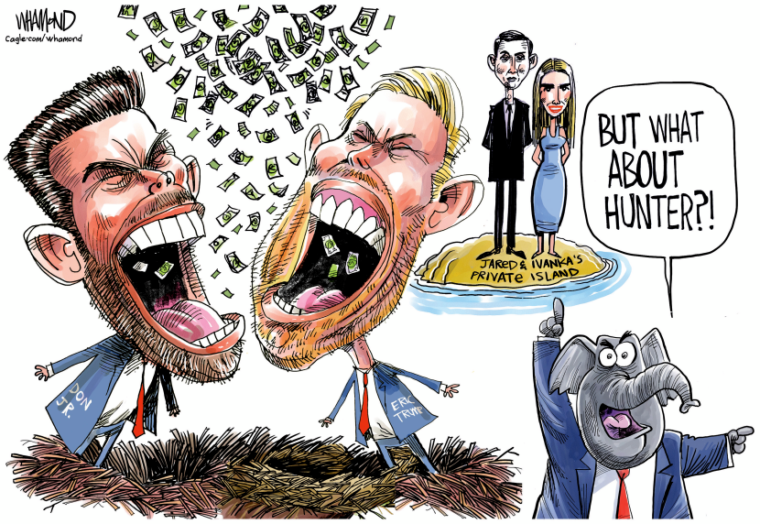
For years, Hunter Biden was less a person than a political symbol. Republicans turned him into a one-man crime wave, Democrats often treated him as a liability to be ignored, and much of the media covered him as a walking scandal.
Now, in one of the strangest political plot twists, he’s becoming a major social media star, attracting nearly one million followers on X by doing something radical: talking honestly about his own failures.
He’s hailed for candidly discussing his recovery, for his self-depreciation and wry wit, clashes with media figures and right wingers, and defending his family.
He doesn’t deny his past, he leans into it. That’s a very different approach to 21st century American politics where everyone usually denies, deflects, blames or attacks.
If someone insults him as a drug addict he often responds with variations of “Yep. That’s my story” When one person called him a “meth head” Biden replied: “You mean crack head.” And when hit with homophobic slurs he shoots back, “And all your gym pictures with your greased muscles are really hot.”
He has some critics.
“A lot of Biden’s posting is unobjectionable and sometimes even wholesome — at least by the standards of online attention-seeking behavior,” writes MS NOW’s Zeeshan Aleem. “But there’s an aspect of his new identity that I find more troubling: his attempts at cross-partisan political populism. Regardless of what his intentions are, he’s exhibiting a naiveté about noxious right-wing ideas.”
What has surprised many is Hunter Biden’s social media presence isn’t built on denial or image-polishing. He speaks with remarkable candor about addiction, often using humor at his own expense while reminding followers that addiction nearly destroyed his life. He argues that recovery is indeed possible. In an era where public figures often hide their failures, his willingness to discuss his addiction openly may be one reason so many people find him relatable.
Meanwhile, Biden’s life has been a roller coaster.
When he was a child a car accident killed his mother and sister and devastated his father, former President Joe Biden. Hunter became a successful lawyer and businessman. Then he lost his brother, Beau Biden, to brain cancer. He spiraled into crack and alcohol addiction. He faced years of congressional investigations, political attacks, lawsuits, leaked private material, and relentless public scrutiny. He has now been sober for seven years.
Hunter Biden’s story taps into something deeply American: the belief that a person’s worst chapter doesn’t have to be the final chapter.
Consider some famous second acts:
Ulysses S. Grant flopped in business, struggled financially, and was considered washed up before becoming the Union’s most important general and later president. Winston Churchill was considered a political has-been before becoming Britain’s historical wartime leader.
Johnny Cash’s addiction nearly destroyed his career and he made one of music’s greatest late-life comebacks. Robert Downey Jr. went from arrests and addiction to becoming a Hollywood mega-star. Muhammad Ali lost years of his career and public standing before becoming a global icon. Martha Stewart went from prisoner to media powerhouse again. Betty Ford transformed personal struggles with addiction into a legacy of helping others recover.
The common thread is not perfection. It’s survival.
And perhaps the appeal isn’t really Hunter Biden at all. Perhaps it’s because in an age of spin, excuses, denials and endless finger-pointing, people are encountering someone who says, “Yes, I made terrible mistakes. No, I’m not proud of them. But I am here.”
The strange thing isn’t that Hunter Biden is finding an audience. It’s that after years of investigations, hearings, leaks, accusations and headlines, the thing people seem to like most about him is the one thing nobody expected:
He sounds human.
People who spent years telling us Hunter Biden was finished may have overlooked something. Americans love comeback stories. We make movies about underdogs. We cheer when Rocky gets off the canvas. We admire people who refuse to stand down.
Never underestimate the power of a second act.
Copyright 2026 Joe Gandelman, distributed exclusively by Cagle Cartoons newspaper syndicate.
UPDATE: Hunter Biden just posted this. Click on the SHOW MORE button to read it in its entirety:
To everyone so eager to cancel someone for a tattoo they got at age 22, a drunk text, a selfie they took in the middle of a mental health crisis:
Show us your laptop.
Show us your iCloud.
Open your entire digital life to your worst enemy. No context. No filter. No explanation.…— Hunter Biden (@HunterBiden) June 12, 2026

Joe Gandelman is a former fulltime journalist who freelanced in India, Spain, Bangladesh and Cypress writing for publications such as the Christian Science Monitor and Newsweek. He also did radio reports from Madrid for NPR’s All Things Considered. He has worked on two U.S. newspapers and quit the news biz in 1990 to go into entertainment. He also has written for The Week and several online publications, writes a column for Cagle Cartoons Syndicate and has appeared on CNN.