


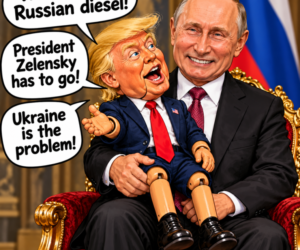




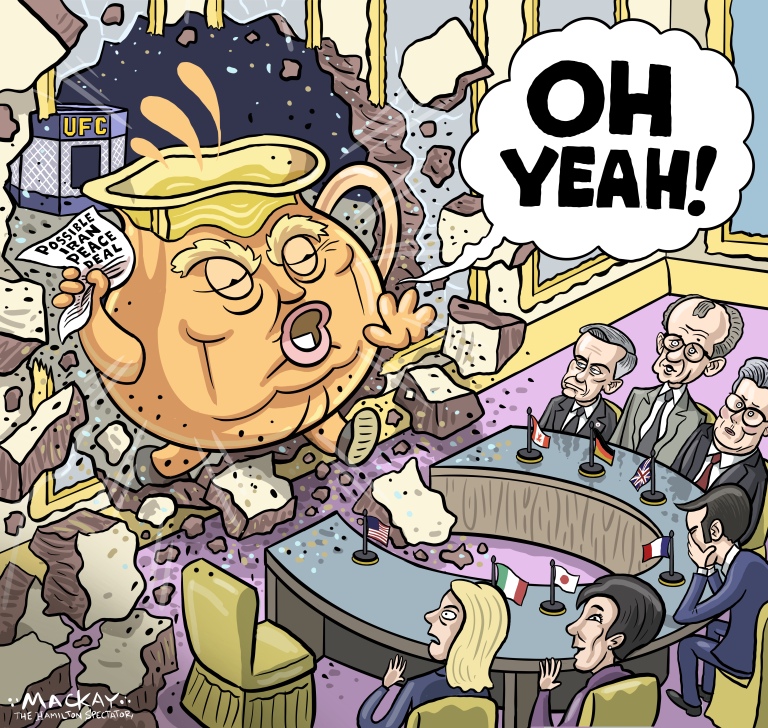
Amidst global skepticism, Trump’s theatrical power play collides with a fragile peace proposal as he faces wary G7 leaders.
Trump’s G7 Gambit: Spectacle Over Substance
As Air Force One touches down in France for the G7 Summit, President Donald Trump arrives not merely as a leader but as a disruptor-in-chief, carrying with him the echoes of a spectacle that captivated and confounded in equal measure. Fresh off an unconventional display at the White House — a fusion of combat sports, political theatre, and military bravado — Trump seeks to project an image of strength. Yet, beneath this high-testosterone veneer lies a peace plan as fragile as the alliances it threatens to undermine.
News: Trump Arrives for Group of 7 as Allies Rethink Their Relationship With U.S. https://www.nytimes.com/2026/06/15/us/politics/trump-group-of-7-summit.html
The South Lawn event was a deliberate orchestration of power, a spectacle reminiscent of ancient gladiatorial displays, designed to signal dominance. Critics and commentators saw it as a theatrical assertion of Trump’s self-perceived strongman image — one that prioritizes optics over substance. This comes at a time when the world grapples with the aftermath of a U.S.-Iran conflict that has not only claimed lives but also sent shockwaves through the global economy.
The proposed U.S.-Iran memorandum, hastily announced, lacks the solidity of a treaty. With a scant 60-day window, it offers more questions than answers. Verification remains ambiguous, enforcement mechanisms are unclear, and the terms are so loosely defined that they invite divergent interpretations. For European leaders, skeptical of Trump’s commitment and wary of his unilateral tendencies, this deal is a precarious foundation upon which to rebuild trust.
News: For His 80th Birthday, Trump Brought a Cage Match to the White House Lawn https://www.nytimes.com/2026/06/14/us/u