







Not one to avoid controversy, President Trump has proposed that civil service employees sign extraordinarily broad non-disclosure agreements (NDAs). Supposedly, an employee may refuse to sign but that could lead to dismissal.
The Atlantic points out that there’s a reason the federal government hasn’t already implemented NDAs: they aren’t necessary. Employees “who work with classified information already sign a binding agreement, known as SF-312, to never share sensitive material.”
Moreover, sharing unclassified information has no broad criminal ban.
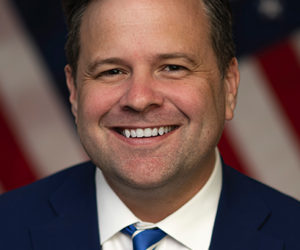
Other laws prohibit federal employees from sharing personal information residing in government databases. After all, as Office of Personnel Management (OPM) Director Scott Kupor told Federal News Network in May, “Americans should be able to trust that their personal data and sensitive government information are being handled responsibly.”
Remember the controversy last year when DOGE accessed Social Security Administration (SSA) databases? A whistleblower reported that DOGE employees put some of that data on a “vulnerable cloud server.” That’s not responsible handling of personal data.
In January 2026, the SSA updated 2025 “testimony given by top agency officials” in a lawsuit alleging that DOGE was illegally accessing Social Security data.” Yes, DOGE employees (not civil service but definitely covered by federal law) “secretly and improperly shared sensitive personal data last year.”
Then this month, we learned via a whistleblower that DOGE “planned to mark 2.7 million living people as dead in Social Security records as part of an immigration enforcement push.” This is the risk of political appointees with fealty to the president working in agencies rather than civil service employees.
That’s why the Pendleton Act of 1883 ended the spoils system, where politicians handed out jobs as political rewards. That Act created the nonpartisan civil service.
Forcing civil service employees to sign broad NDAs is a step towards turning them into partisans.
For example, Joe Spielberger, senior policy counsel at the Project on Government Oversight, told the Federal News Network that the NDA proposal appears “more designed to protect against potentially politically damaging information from getting out … and to further shield the administration from more transparency and oversight.”
The stated goal, after all, is to reduce press leaks. Yet there’s no mention of Defense Secretary Pete Hegseth’s infamous Signal chat that included a journalist and disclosed secret military information. Nor is there any indication that the NDAs would be extended beyond civil servants to political appointees like Hegseth or DOGE.
It’s worth noting that Trump’s prior efforts to silence employees have met repeated court challenges. For example, during his 2016 presidential campaign, he had staff sign NDAs that were designed to “chill the speech” of staff “about matters of public interest,” the judge wrote when finding the NDAs illegally broad.
This NDA proposal is equally broad. It covers federal information including, but not limited to, “internal agency operations, personnel matters, procurement processes or any sensitive, pre-decisional or deliberative material that is not currently publicly available.”
But what about information that could be publicly available via a Freedom of Information Act request? Under what reasoning might Trump lump it into an NDA? Unexplained.
This NDA proposal privileges secrecy over transparency, which should be a core aspiration of a democratic government. And the Trump Administration has repeatedly claimed to be the “most transparent in history,” despite its record.
The silencing works on multiple levels.
According to Pat Parenteau, emeritus professor at the Vermont Law and Graduate School, the Administration is “trying to persuade, intimidate, threaten employees who are disclosing deliberative process information that discloses attempts by agencies to hide facts that the public is entitled to.”
Nick Bednar, a law professor at the University of Minnesota, narrowed that technique to one of intimidation in a conversation with The Atlantic. “As I see it, the goal of the NDA is to chill employees who would otherwise whistleblow on unlawful activity or mismanagement,” he said.
“Taken alone, today’s proposed rule may seem relatively harmless, but taken in context, it is a significant move toward building a federal workforce loyal to the President above all else,” David Kligerman with Whistleblower Aid, a nonprofit law firm representing whistleblowers, said in written statement.
This proposal would sideline the independent Merit Systems Protection Board which determines eligibility for federal employment. More importantly, it strips away the board’s role in protecting civil servants from partisan political coercion, handing both functions to the White House via the OPM.
Muzzling public servants is the wrong thing to do. Censoring them after they leave government, except for classified information, is also unconstitutional. But this NDA would do that as well.
There are solid reasons to oppose broad federal NDAs. First, since 2017, federal agencies have been prohibited from entering into a contract with an outside firm that requires employees to sign NDAs. Moreover, before bidding on a federal contract, a firm must certify that they do not employ NDAs.
If that is a good rule for contractors, it should be good for civil service employees as well.
Moreover, NDAs are being abused in the private sector and, subsequently, have been restricted by law and courts.
Trump’s proposal is more than importing a private sector technique of dubious practice into government. This is the government importing a practice that even the private sector is being forced to curtail.
Once upon a time, NDAs were reserved for C-suite executives, people who knew lots of private information about products and services in the corporate pipeline. Today, however, between 33% and 57% of U.S. employees must work under an NDA or a similar mechanism. For those in “computer or mathematical jobs,” about 3-in-4 employees report being forced to sign an NDA.
Some NDAs even prevent employees from revealing that such an agreement exists.
There is an intrinsic power imbalance between employer and employee here that employers are manipulating. Employers get silence; employees get a figurative gag.
As an example, the National Labor Relations Board (NLRB) found Amazon’s confidentiality agreements so overbroad that they impeded the employee right to organize a union. According to a lawyer in the case, the agreement affected “almost a million” employees. There was also a non-compete agreement, which the NLRB’s counsel “retroactively rescinded.” Relevance? Amazon is the country’s second-largest private employer.
Ironically, research suggests that employers may be increasing costs with those broad NDAs: more narrow NDAs reduce worker turnover.
NDA abuse has gotten so extreme that almost 20 states have taken action to curtail employers that silence workers about harassment, discrimination and unsafe conditions.
Washington state’s law (2022) is considered the gold standard: it prohibits employers from banning discussion of“[c]onduct that the individual reasonably believes to be illegal discrimination, illegal harassment, illegal retaliation, a wage and hour violation or sexual assault.” Nor can an employer prohibit discussion of conduct that violates a “clear mandate of public policy.”
There’s another reason there’s been no such action at the federal level: NDAs are traditionally used to protect business trade secrets that have monetary value. Federal employees aren’t protecting a market position; they’re being silenced about the public’s own government operations.
This OPM proposal ostensibly does not prohibit employee disclosures about fraud, abuse and misconduct, otherwise known as whistleblowing. However, severe institutional barriers exist right now.
For example, imagine you work for the Environmental Protection Agency (EPA) as a career civil servant. It’s 2015, and you’ve witnessed something troubling, whether data are being manipulated or an enforcement action has been quietly buried. You know the law protects you. You file a whistleblower complaint with the Office of Special Counsel (OSC). That year, OSC referred 62 of the 1,965 disclosures it received for formal investigation. Your odds: roughly 1-in-32.
Those aren’t great odds. But the system existed, it functioned and it occasionally delivered results.
Fast forward to 2025. You’re still at the EPA, or what’s left of it. You’ve watched scientific findings being suppressed. You’ve signed the required nondisclosure agreement as a condition of continued employment. The NDA tells you that whistleblower channels remain open. So you file a complaint. This year, OSC referred 27 of the 2,535 disclosures it received for formal investigation.
That’s less than half of the referrals from 10 years earlier with a 25% increase in complaints. Your odds drop dramatically: roughly 1-in-94. Turns out 2025 was the “worst year on record” for investigating whistleblower complaints.
A path to reporting is technically open. Its door simply leads nowhere.
Everett Kelley, the president of the American Federation of Government Employees, told CNN: “This proposed NDA is another attempt by the administration to purge the civil service of nonpartisan career employees and replace them with loyalists who won’t speak out against waste, fraud, and abuse.”
Replacing nonpartisan civil servants with loyalists is the opposite of transparent government. As the masthead of the Aspen Daily News says, “If you don’t want it printed, don’t let it happen.”
This post first appeared at Substack.

Known for gnawing at complex questions like a terrier with a bone. Digital evangelist, writer, teacher. Transplanted Southerner; teach newbies to ride motorcycles. @kegill (Twitter and Mastodon.social); wiredpen.com