














I am not a wine connoisseur. The last time I ventured into this cultured milieu, I made that abundantly clear.
Writing about China’s burgeoning wine industry a few years ago, I asserted my wine naivety at length.
Among my disclaimers: “I can’t tell the difference between a $7.95 and a $27.95 bottle of wine. I often buy and drink screwcap-bottled wine and even sniff the screw cap…” (I understand that many high end wines are now equipped with screw caps, “Stelvin closures.”)
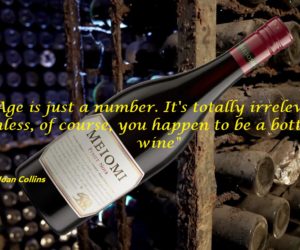
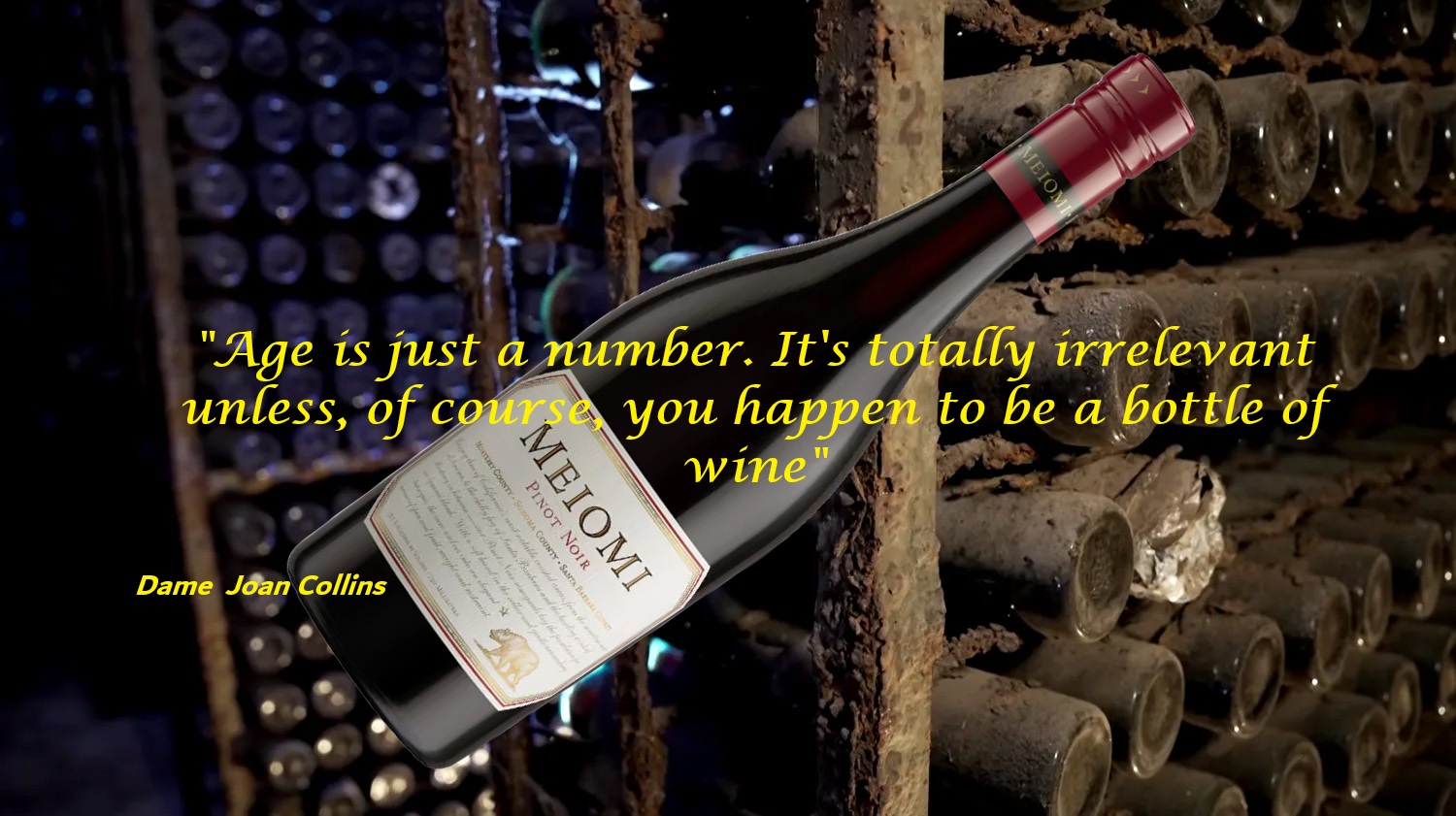
I must admit, however, that I have slightly refined my palate as now I will splurge $17.99 for my favorite wine, a Meiomi Pinot Noir. Alas, I still cannot detect the promised “lush aromas of black cherry and toasty oak…followed by notes of dark berry, juicy strawberry, and toasty mocha.”
Now, about the title of this piece.
This writing is not about finding that great Meiomi. Rather, it is about the historical backdrop to a recent unsealing of a massive collection of approximately 40,000 bottles of rare and historic wine, some dating back to the early 19th century, many “once part of the collection of the Romanov dynasty, the last imperial family of Russia.”
The vast trove of wines, once belonging to Soviet dictator Joseph Stalin, is in Tbilisi, the capital of Georgia, now an independent country in the Caucasus region.
The wines are stored in a vault located deep beneath the streets of Tbilisi “covered in thick cobwebs and dust” and variously described as a “time capsule” and a “Pantheon of Wine.”
The story of how these wines ended up in Tbilisi is intriguing and offers a fascinating glimpse into Russian viniculture and wine tradition, including Georgia’s 8,000 years of winemaking heritage and the Tsars’ and Stalin’s passion for wine.
Following the Russian Revolution of 1917, the newly established Bolshevik state seized the large and prized imperial Romanov wine holdings. Joseph Stalin, a native of Georgia and himself a fervent wine drinker and collector, took custody of the collection and augmented it with his favorite Georgian wines, establishing several wine caches across the former Soviet Union.
During World War II, concerned that the Nazis might occupy Russia and loot his precious wines, Stalin ordered the evacuation of his oldest and most valuable wines, some 60,000 bottles – including prized wines from the legendary Massandra Winery in Crimea — to secure locations across the former Soviet Union.
One of these is the Tbilisi vault, a wine treasure that includes some of the rarest Georgian and French wines, many over two centuries old, some believed to have belonged to Napoleon Bonaparte.
The collection was recently opened to the public by the Georgian government which now plans to auction part of the collection and dedicate the proceeds to funding a state-of-the-art wine education and research center in Georgia. An institution that will train future generations of viticulturists, winemakers, and wine professionals.
Vinetur, a digital publication focused on the wine industry, reports:
For collectors, the cellar offers an opportunity to acquire wines with extraordinary provenance. For historians, it provides insight into how wine has intersected with power, politics, and cultural identity across centuries. For Georgia, however, the collection represents something even more important: a bridge between its rich winemaking past and its ambitions for the future.
While each of the more than 40,000 wines is priceless, some of the wines, especially those more than a century old, may have deteriorated over time despite careful storage.
I asked my young nephew Wallace Colyer, a Level 3 Sommelier, about it.
His answer is both interesting and – to this octogenarian – evocative, as it reminds me of life itself, how some people age well, some not so well…
My nephew explains the chemistry of wine — acidity, tannins, etc. — and how, over the years the compounds can transform the wine, sometimes for the better, sometimes for worse.
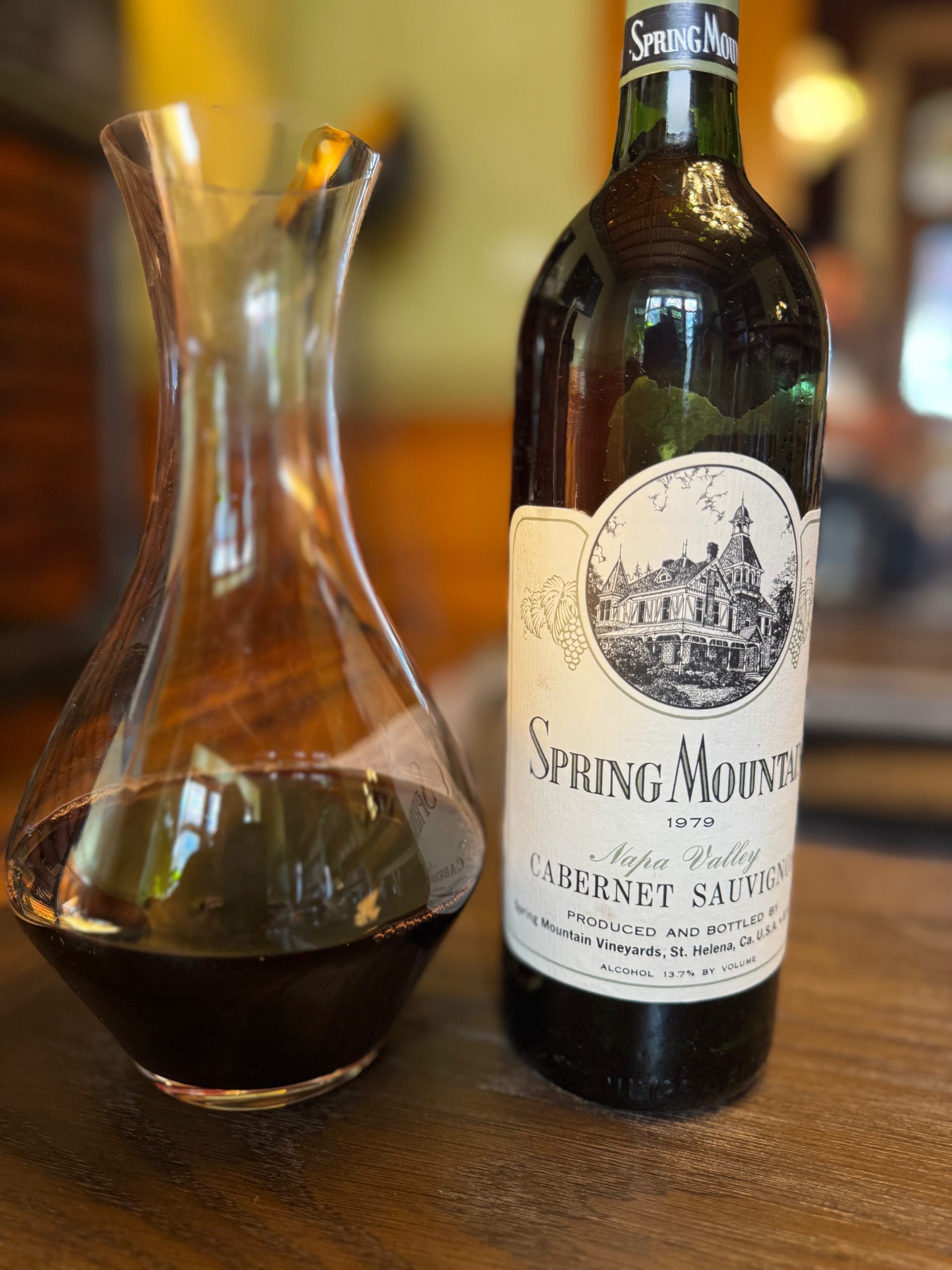
For example, he found a 1979 wine (below) he tried a couple of years ago (below) to be “absolutely fabulous.” “Ironically,” he adds, “part of the reason it was so good today is that it was not at all drinkable when it was young…What seems austere or even harsh at five years old can become elegant and complex after decades in the bottle…”
On the other hand, he points out, “A 100-year-old wine should not be expected to taste like the grape variety from which it was made…Dried fruits replace fresh fruits. Tobacco, tea leaf, leather, forest floor, mushroom, spice, and earthy notes emerge. The tannins soften…What makes a great old wine fascinating is not that it preserves youth, but that it reveals what remains after youth disappears.”
He concludes:
The real achievement is survival. If properly stored, a wine can evolve from an expression of fruit into an expression of time itself. At that point, you are tasting the cumulative effects of decades of aging, the decisions of the winemaker, the quality of the storage, and the remarkable resilience of a wine that managed to stay alive long enough to tell its story.
It reminds one of life itself and, indeed, many articles have been written comparing the ageing of wine to human life, “one of literature’s most enduring metaphors.”
Here is one, “Mastering Midlife Change: What can Wine teach us about Ageing.”
And here is an excellent one on all aspects of wine ageing,“Why Do Some Wines Get better with Age While Others Don’t?”
