












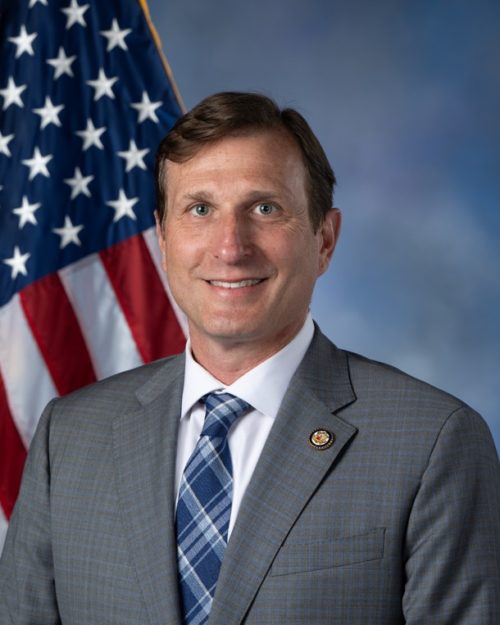
Congressman Dan Goldman represents New York’s 10th Congressional District, a district uniquely shaped by the legacy of September 11. Few congressional districts were more directly affected by the attacks, and Goldman has played an important role in supporting constituents who continue to live with their aftermath.
Goldman has been a leading advocate for securing permanent funding for the World Trade Center Health Program, which provides care to more than 140,000 responders and survivors suffering from cancers, respiratory illnesses, and other conditions linked to exposure from the September 11 attacks.
Among his efforts, Goldman helped introduce the 9/11 Responder and Survivor Health Funding Correction Act, legislation designed to help ensure funding for the World Trade Center Health Program through its scheduled expiration in 2090. He also worked alongside Senators Kirsten Gillibrand, Chuck Schumer, and Mike Braun, as well as Representatives Andrew Garbarino and Jerrold Nadler, to secure $676 million to address funding shortfalls within the program. Without congressional action, the program faced the prospect of being forced to turn away eligible participants, including 9/11 survivors and first responders, beginning in 2028.
Goldman’s work on behalf of those affected by September 11 extends beyond health care funding. He also helped introduce the American Victims of Terrorism Compensation Act, legislation intended to ensure that tens of thousands of American victims of terrorism (including the families of more than 3,000 individuals killed on or after September 11) receive the compensation to which they are entitled. The legislation would provide annual compensation payments to eligible victims, increase congressional oversight of the fund’s operations, and expand staffing to ensure the program can effectively serve claimants.
September 11 is not the only terrorist attack whose victims Goldman has sought to assist. He has also been active in supporting law enforcement officers injured during the January 6, 2021, attack on the U.S. Capitol.
Goldman has frequently criticized what he views as inconsistencies among those who publicly support law enforcement while minimizing the experiences of officers who defended the Capitol on January 6. He has highlighted the stories of individual officers, including Harry Dunn and Daniel Hodges, both of whom sustained injuries during the attack.
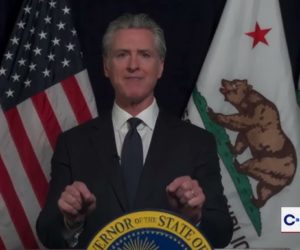
In addition, Goldman has advocated for honoring the officers who protected the Capitol. When efforts emerged to delay or prevent the installation of a commemorative plaque recognizing their service, he publicly challenged those efforts. He has also spoken extensively about the handling and release of Capitol surveillance footage. In media appearances, including on CBS, Goldman argued that safeguards established by the January 6 Committee were necessary to protect Capitol security and expressed concerns about releasing footage without appropriate review procedures.
The impact of international threats is also reflected in New York’s 10th District through institutions such as the Museum of Jewish Heritage, which is dedicated to preserving the memory of the Holocaust and educating future generations at a time when concerns about antisemitism have grown nationally and internationally.
Another aspect of Goldman’s record is his role during the first impeachment proceedings against President Donald Trump. Before entering Congress, Goldman served as lead counsel for House Democrats during the impeachment investigation, a position that elevated his national profile and established him as a prominent figure in congressional oversight efforts.
Despite these accomplishments, Goldman faces a serious primary challenge. During a recent debate, the candidates were asked who should be the Democratic nominee for president in 2028. Brad Lander answered that it should be Representative Alexandria Ocasio-Cortez. Goldman offered a different response, stating that the nominee should be “whoever the people choose.” This exchange illustrates a key difference between the candidates. Goldman emphasized that voters, not party insiders, should determine the future direction of the Democratic Party. His supporters view that approach as evidence of an independent streak, while they argue that Lander represents a more traditional, party-aligned approach.
Only registered Democrats are eligible to vote in the impending primary. This relatively small group of voters will effectively determine who represents the entire district in Congress. In this election, primary voters will not only choose a nominee; they will decide whether Congressman Dan Goldman remains in office.
Because New York’s 10th District contains communities deeply connected to both September 11 and issues of democratic accountability, the outcome of this race carries significance beyond a single congressional seat.
If primary voters deny Goldman the nomination, and therefore his congressional seat, 9/11 families, survivors, and the officers who fought on January 6 would lose a major advocate. The House of Representatives would also lose a member whose work has focused on accountability, oversight, and support for victims of terrorism and political violence.