







The near legendary elementary school teacher sighed.
“I’ve been teaching more than 23 years and I love the kids,” he said. “But it’s getting harder and harder and I think I’m going to hang it up at the end of this year.”
What’s getting harder?
“There’s so little support at home when the kids act up. There’s so much stress in the classroom. There are some nights when I can’t get to sleep. I love what I do but I think it’s time. I have to take care of myself.”
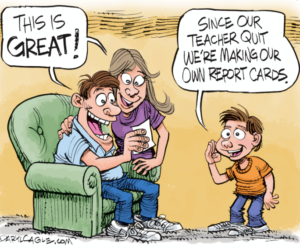
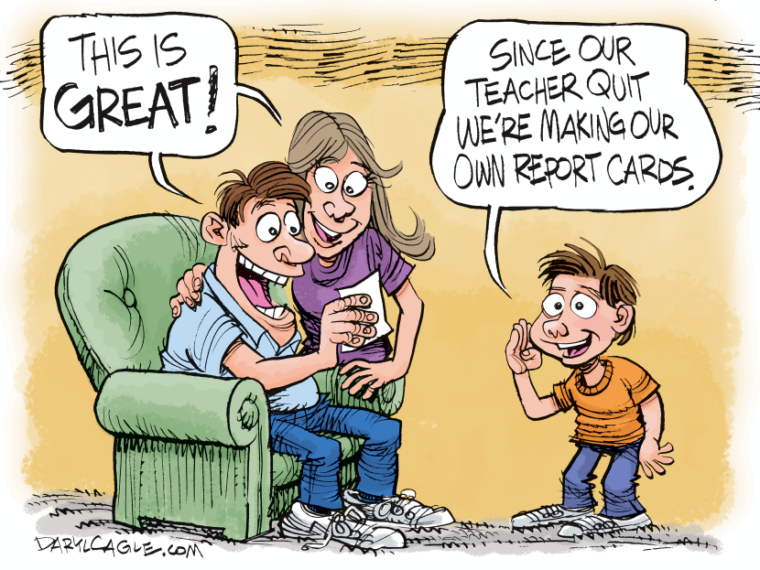
This teacher isn’t alone. There is a teacher shortage and it isn’t just a number problem, it’s a working-conditions problem. Teachers are not merely leaving because they found better jobs. Many are leaving because the classroom has become a pressure-cooker: more disruptive behavior, more student anxiety, more parental hostility or absence, more political second-guessing, and less backup from administrators who fear complaints, lawsuits or bad publicity.
The result: a profession built on idealism now running on fumes. The facts give a clue why.
According to Learning Policy Institute, about 1 in 7 public school teachers either moved to other schools or left teaching between 2020-21 and 2022. About 7.1% left the profession entirely. Rand Corporation says turnover stabilized after the pandemic, but there’s still a big problem, especially in high-poverty, urban, special education, math, science and rural positions.
A 2025 national scan estimated 1 in 8 teaching positions is either vacant or filled by someone not fully certified, affecting more than 6 million students. Another estimated 56,000 vacant positions and 350,000 unqualified teachers for 2025-2026.
What’s going on? The core issue is attrition. Learning Policy Institute says it accounts for some 90% of annual teacher demand, and less than one-fifth of those leaving are simply retiring. Many cite other careers, low salary and dissatisfaction.
Behavior and support are key reasons why some teachers are heading for the exits. The National Education found Association found more than 75% of educators surveyed cited lack of parental support in student discipline, and 60% cited lack of administrator support. Rand found 44% named behavior as their top job stressor while Pew found 80% of teachers deal with behavioral problems at least a few times a week.
In the past, when a teacher called home, parents often asked, “what did my child do?” Today, the questions at times would be “What did you to my child?…My child couldn’t have done that!…Well, he says he didn’t do it so you’re wrong.”
At first glance, it would seem kids are more violent. From 2019 to 2026 there are several incidents of kids in middle schools who were either in fights or sucker punched, fell, hit their heads and died. But it’s risky to claim that school violence is statically “worse than ever” because data are mixed.
However, it isn’t risky to say teachers’ experience schools as more volatile. The smartphone age has turned hallway fights into viral entertainment, and isolated brutal incidents – body slams, stabbings, knockout punches—now ricochet across TikTok, You Tube and X before the school district can issue its first statement. That magnifies fear, but it also reflects something real: many educators feel they’re being asked to teach, parent, counsel and police and absorb abuse — all at once.
Teachers can change lives, and I was fortunate to have two great ones. Seymour Schonberger at Amity High School in Woodridge, Ct. and Professor Marcus Franda at Colgate University totally changed my life. They gave me confidence, encouragement, and motivation that still fuels me. They also became surrogate fathers.
Somewhere tonight, an exhausted teacher is sitting at a kitchen table, thinking back to why he or she went into teaching, and wondering whether this is the year to quit. That should alarm all of us — because long after students forget test scores and homework, they remember the teachers who believed in them, challenged them, rescued them, or changed the direction of their lives.
America doesn’t just have a teacher shortage. It has a shortage of grown-ups willing to let teachers teach.
Copyright 2026 Joe Gandelman, distributed exclusively by Cagle Cartoons newspaper syndicate.

Joe Gandelman is a former fulltime journalist who freelanced in India, Spain, Bangladesh and Cypress writing for publications such as the Christian Science Monitor and Newsweek. He also did radio reports from Madrid for NPR’s All Things Considered. He has worked on two U.S. newspapers and quit the news biz in 1990 to go into entertainment. He also has written for The Week and several online publications, writes a column for Cagle Cartoons Syndicate and has appeared on CNN.