



by Hassan Elbiali
I remember reading Thomas Schelling’s Arms and Influence as a graduate student and thinking the distinction between deterrence and compellence was academic hair-splitting. Deterrence stops an adversary from acting. Compellence forces them to change behavior they’ve already chosen. Fine. Subtle. Seemingly theoretical.
Then Operation Epic Fury happened. And suddenly Schelling’s 1966 framework reads less like political science and more like a prophecy Washington ignored.
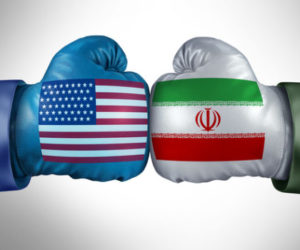
On February 28, 2026, the United States and Israel launched nearly 900 strikes against Iran in the first 12 hours alone — targeting nuclear infrastructure, air defenses, military leadership, and ultimately killing Supreme Leader Ali Khamenei. The timing of the initial attack was tied in part to the ability to target Khamenei before he could go into hiding. Trump called it a success. And tactically? Maybe it was. But strategy isn’t tactics. And what Washington “won” in the air, it’s losing everywhere else.
The Objective That Kept Changing
Here’s a simple question nobody in Washington wants to answer clearly: what exactly was the goal?
Although the declared objective was the destruction of Iran’s nuclear and missile programs, Trump suggested in a recorded address at the outset of the operation that its broader aim was regime change — without specifying how that might be achieved. That’s not a military objective. That’s a wish.
Schelling would have spotted the problem immediately. Compellence — forcing Iran to change course — requires the target to have an off-ramp and a reason to take it. Bombing Khamenei into his grave removes the interlocutor. It doesn’t compel; it decapitates. And decapitation, as decades of counterterrorism research tell us, rarely produces the political outcomes planners promise.
Air strikes alone cannot topple a government, and Iran in 2026 is likely to emerge battered but not broken — a costly example of American hubris and the limits of airpower. That’s not my assessment. That’s the Stimson Center’s.
The Non-proliferation of Nuclear Weapons Agreement is Now a Suggestion
This is the part that doesn’t make enough headlines. While Washington went to war nominally to prevent nuclear proliferation, it was simultaneously — and with remarkable audacity — undermining the very regime it claimed to be defending.
While going to war over Iran’s uranium enrichment program, President Trump gave both South Korea and Saudi Arabia his blessing to acquire uranium-enrichment and spent-fuel-reprocessing programs, undermining the nuclear nonproliferation regime.
Let that sink in. Iran gets bombed for enrichment. Saudi Arabia gets a wink and a handshake for the same capability. The message this sends to every government watching — from Ankara to Cairo to Islamabad — is that the NPT is not a legal framework. It’s a selective enforcement tool for the powerful against the inconvenient.
The lesson that nuclear weapons are the only insurance policy against a US attack is now written in fire over Tehran. Saudi Arabia, Turkey, Egypt, and South Korea have all previously signalled nuclear hedging interest. If that doesn’t alarm you, you haven’t thought it through to the end. A world where five more states are hedging toward the bomb in 2030 is not a world made safer by Operation Epic Fury. It’s a world made dramatically more dangerous.
How Washington Lost Its Gulf Allies Without Losing a Single Diplomatic Cable
The Gulf states story is being badly under-reported, and it matters enormously.
Before the first strike dropped, Saudi Arabia directly assured Iran in mid-January that it would not allow its airspace or land to be used for offensive purposes. Crown Prince Mohammed bin Salman reiterated this message. Washington launched anyway. And when Iran retaliated — hitting Gulf cities, oil infrastructure, and US bases — the Gulf states discovered they had been drawn into a war they explicitly refused to join.
Operation Epic Fury was not preceded by broad consultation across Gulf governments. Qatar and Oman’s mediation efforts toward de-escalation were completely disregarded.
This is the compellence failure nobody’s calling what it is. The US deployed military force to reshape regional order. Instead, it shattered the trust architecture that underpinned its regional dominance. Multiple GCC states blocked US base access before the war started. The US reportedly stonewalled Gulf state interceptor replenishment requests during the conflict. Allies who couldn’t refuse American military use of their territory, and then couldn’t get spare parts for their own air defenses — that’s not an alliance. That’s a protection racket with poor service.
The Paradox at the Heart of All This
Here’s what I genuinely don’t know: whether anyone in the Trump administration ran the second-order calculations before February 28.
The Arms Control Association assessed that the strikes may have strengthened the political case within Iran for weaponization rather than weakened it — a strategic irony of the first order. Iran was bombed because it didn’t have a bomb. The surviving Iranian political establishment has now watched its supreme leader assassinated and its military infrastructure dismantled. What rational conclusion do they draw? The same one Libya drew, the same one Iraq drew, the same one every state watching this drew: the bomb is the only thing America doesn’t bomb.
Washington wanted to eliminate a nuclear threat. It may have manufactured the political conditions for one.
What Comes Next
The result is an Iran that is more militarised, more risk-acceptant, and more willing to leverage disruption as a sustained strategy. Managing this Iran will be at least as complex as confronting it militarily.
I opened with Schelling because his work remains the clearest lens we have for this kind of strategic miscalculation. The question he’d ask now isn’t whether the strikes succeeded tactically. It’s whether they produced the political outcome sought. On nonproliferation: they made it worse. On Gulf alignment: they fractured it. On Iran’s nuclear calculus: they likely hardened it.
Washington bombed its way into a strategic hole and called it victory. The least the rest of us can do is say so — clearly, and before the next one.
Hassan Elbiali is a political analyst and writer covering U.S. foreign policy, international security, and Middle East geopolitics. His work appears in Independent Australia and Counterfire.