












Have American voters reset the political clock to the day before Donald Trump descended that golden escalator in 2015?
It certainly looks that way.
The midterm blue tsunami delivered one of the most humiliating repudiations of a president and his political party since Watergate voters sent a message: Enough is enough.
But will Trump get the message? Don’t bet your mortgage on it.
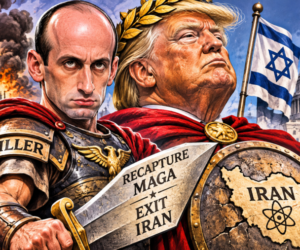
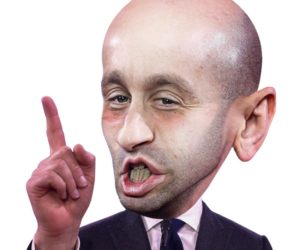
Days after Republicans were electorally pulverized, Trump replaced White House chief of Staff Susie Wiles with Stephen Miller, the hard-line architect of his administration’s controversial immigration and deportation policies.
If voters wanted less confrontation, Trump responded by hiring a man who seemingly considers confrontation a recreational sport.
The election was about the economy, tariffs, wars, skyrocketing gas prices, immigration crackdowns, corruption and the perception Trump, his family and cronies consider themselves above the laws and norms governing everyone else.
But something else was at work. Trump fatigue.
Americans were simply sick of Trump. Sick of his voice, his ramblings, his insults, his chaos. Trump gets enormous exposure, but exposure didn’t do Pee-wee Herman any good.
Trump’s defenders dismiss such sentiments as “Trump Derangement Syndrome.” It’s a convenient phrase substituting name-calling for answering legitimate concerns about authoritarianism, dishonesty and the degradation of political discourse.
Remember the 2015 Republican debates? Trump was sharper, quicker and often genuinely charismatic. Today’s Trump increasingly resembles fat Elvis on a bad night.
Yet he remains president of the United States while acting as though he’s president of his MAGA base, by his MAGA base, and for his MAGA base.
Political scientists say successful politicians must aggregate interests: combine competing demands, build coalitions and bring diverse Americans under one big political umbrella.
Trump prefers to aggravate interests.
He seems to delight in antagonizing Americans who didn’t vote for him. His threats involving federal disaster assistance and political loyalty illustrate a presidency in which even government help can become another partisan weapon.
Whatever happened to the quaint notion that presidents represent all Americans?
Trump has transformed American politics into professional wrestling without the entertainment value. Insults replace argument. Personal attacks substitute for policy. Vulgarity becomes presidential language.
And hovering over it all is the ghost of Roy Cohen.
Cohen, Trump’s notorious lawyer and mentor, operated according to a ruthless political philosophy: Always attack. Never apologize. Never admit defeat. Claim victory even when you’re losing. When facts become inconvenient manage your own reality.
Sound familiar?
Trump has become Roy Cohen Jr., with a presidential seal.
Cohen helped teach Trump politics wasn’t about persuasion or compromise. It was about crushing opponents, dominating headlines and never admitting the other fellow might have a point.
Trump didn’t merely learn Cohen’s lessons. He turned them into a governing philosophy.
Now comes Stephen Miller, a political warrior whose confrontational approach seems perfectly suited to a president who regards compromise as surrender.
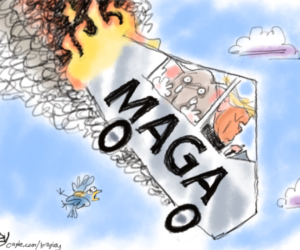
With Miller wielding greater White House power, the next two years could become even more turbulent. The voters asked for a change in direction. Trump apparently decided the solution was to step harder on the accelerator.
That’s the great irony of this election. Americans may have reset their political clocks, but Trump is still operating on Roy Cohen time. And unless he changes, Republicans could face another electoral reckoning in 2028.
Which brings us to a familiar nursery rhyme, updated for our political age:
Dumpty sat on a wall,
Trumpty Dumpty had a great fall,
All of the king’s spin doctors and all the king’s men
Couldn’t make Trumpty a winner again.

Joe Gandelman is a former fulltime journalist who freelanced in India, Spain, Bangladesh and Cypress writing for publications such as the Christian Science Monitor and Newsweek. He also did radio reports from Madrid for NPR’s All Things Considered. He has worked on two U.S. newspapers and quit the news biz in 1990 to go into entertainment. He also has written for The Week and several online publications, writes a column for Cagle Cartoons Syndicate and has appeared on CNN.