















If you live long enough, ANYTHING can happen.
Who would have thought South Carolina, one of America’s most reliably Republican states, could become a political battleground that helps determine which party controls the United States Senate?
But that’s the outlook as we zoom towards the November 3 mid-terms.
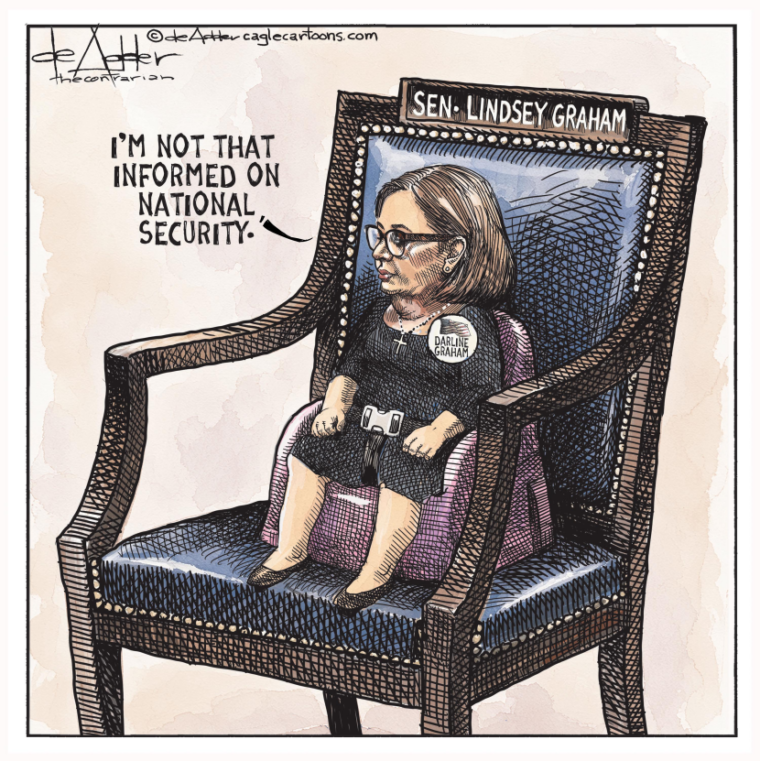
A New York Times/Seina poll shows Democratic candidate Annie Andrews virtually tied with Republican Sen. Darline Graham, the late Lindsey Graham’s sister. This is a state Donald Trump carried by nearly 18 percentage points in 2024. Republicans weren’t supposed to be fighting for political survival here.
They’re discovering reliably Republican political real estate may suddenly have a Democratic buyer. And South Carolina may not be the only surprise.
In Maine, Republican Susan Collins faces another tough re-election battle with Democrat Troy Jackson narrowly leading in recent polls. Collins has survived political predictions of her demise before and cultivated a reputation as a moderate Republican, but her votes often helped advance Trump’s agenda. Will Maine voters feel enough is enough?
In Michigan, Democrat Abdul El-Sayed is favored over Republican Mike Rogers in the race for an open Senate seat. In North Carolina, former Democratic Gov. Roy Cooper is favored over Republican Michael Whatley. In Georgia, incumbent Democratic Senator Jon Ossoff has opened a big lead and is being called the new JFK.
And then there’s Texas.
Democrat James Talarico is running a competitive race against Republican Ken Paxton in a state where Democrats have spent years watching promising campaigns end in disappointment.
In Ohio, former Democratic Sen. Sharrod Brown is tied in polls in his comeback bid against Republican Sen. Jon Husted, And Florida? It looks like it’ll break Democrats’ hearts again.
Democrats need a net gain of four seats to take control of the Senate. They can’t simply win one or two headline-making races and declare victory.
In Alaska, the New York Times reports Democratic Senate candidate Mary Peltola’s Alaska Senate campaign recruited a man with the same name as her Republican opponent Dan Sullivan in order to siphon votes. Trump calls it illegal and even now demands she resign.
So Alaska’s Senate contest now has three ongoing battles: the contest for votes, the controversy over campaign conduct, and the legal fight over whether the results can be certified. Alaska’s voters will have to decide which Dan Sullivan they want – or whether they want Mary Peltola. Will the politicians and the courts accept Alaskan voters’ answer?
Meanwhile, reports have surfaced in several states of voters attempting to vote for Democratic candidates on touchscreen voting machines, only to find Republican candidates selected instead.
Election officials say such problems can result from accidental touches, screen calibration issues of vote error. There is no established evidence that these incidents represent a coordinated effort to manipulate the election. But for some reason you don’t see reports of people voting Republican and having voting machines switch to Democrat.
So consider the irony: the party that once seemingly had an almost insurmountable advantage in the Senate is now confronting competitive races across an unexpectedly broad political map.
And South Carolina, of all places, could help decide the outcome.
For Republicans, that’s not exactly the kind of Southern hospitality they had in mind.
This campaign has been marked by the gleeful return of former President Barack Obama to the campaign, delivering rousing speeches to packed audiences, decimating Trump with sarcasm, jokes and a strong serious message. Obama, who some criticize for being missing in action politically during the Trump years, is the quintessential Happy Warrior – and his crowds roar.
Trump is on the campaign trail, too, but he’s now an unhealthy, seemingly weary shadow of what he was before. His speeches are often tired and rambling, he has verbal glitches, and he has broken the porcelain toilet bowl bottom into utter vulgarity with repeatedly long riffs about men’s asses. How far our political discourse has fallen.
Donald Trump has repeatedly said that he wants voters to vote as if he is on the ballot. It looks as if they will.

Joe Gandelman is a former fulltime journalist who freelanced in India, Spain, Bangladesh and Cypress writing for publications such as the Christian Science Monitor and Newsweek. He also did radio reports from Madrid for NPR’s All Things Considered. He has worked on two U.S. newspapers and quit the news biz in 1990 to go into entertainment. He also has written for The Week and several online publications, writes a column for Cagle Cartoons Syndicate and has appeared on CNN.