








President Donald Trump heads into the Shenzhen summit on November 19 to butt heads with China’s Xi Jinping and Russia’s Vladimir Putin from a position of considerable weakness, following his spectacular midterm setbacks and the costly, unresolved war with Iran.
Worse still, 40 European countries signed a declaration at the European Political Community (EPC) summit in Dublin on November 12–13 asserting that Europe must have a voice in negotiations over Ukraine and its own security. Their position falls short of the unconditional backing Trump would like for his efforts to secure peace with Putin.
UN Secretary-General António Guterres reinforced the legal principles governing any Ukraine peace settlement at a press conference in Manila on November 16, on the sidelines of the ASEAN summit, which Trump is due to attend today.
Guterres called for an immediate ceasefire that: “leads to a peace process that guarantees the respect of international law, the respect of the Charter, the respect of the resolutions of the General Assembly, and consequently, the respect of the territorial integrity of Ukraine.”
“That is the kind of just peace we are fighting for,” he said, while acknowledging the formidable obstacles. “To be honest, it is difficult to be optimistic when we face a situation that now lasts for almost five years.”
What the world’s three most consequential leaders will discuss remains unclear, although Trump reportedly wants to persuade Xi to join unprecedented trilateral negotiations on limiting nuclear arms.
The initiative follows the expiry of the US-Russia New START treaty in February 2026, removing the last major treaty-based limits on the two countries’ strategic nuclear arsenals. Trump wants a new, modernized agreement that includes China.
Guterres has emphasized that nuclear arms control is an issue of international security, not simply a matter for three powerful leaders to settle among themselves.
Trump could turn such an agreement into a major foreign-policy legacy. But Xi is unlikely to accept equal numerical restrictions when China’s estimated 620 nuclear warheads remain far below the US and Russian total inventories of approximately 5,042 and 5,420 respectively.
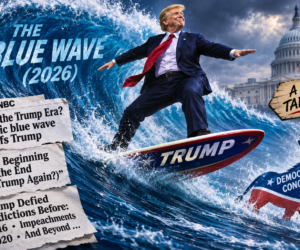
Trump’s credibility as a leader of global stature, capable of bringing Xi and Putin to heel, has diminished considerably. For many, he is no longer the self-proclaimed colossus striding across the geopolitical stage, with Europeans and leaders from around the world rushing, in his own words, to “kiss my ass”.
Nevertheless, Trump retains the considerable power and leverage of the American presidency. The midterms have weakened him, but not decisively. Foreign governments routinely factor the vagaries of American domestic politics, particularly the consequences of midterm elections, into their calculations.
The more significant challenge to his international standing comes from Dublin, where European leaders insisted that they must participate in negotiations concerning Ukraine and any future European security architecture.
The declaration, signed by 40 of the 47 European Political Community members, demonstrates a broad European consensus on Ukrainian sovereignty and the right of countries to choose their own alliances. But its signatories have yet to demonstrate that they can agree on the military, financial and diplomatic costs and risks of defending those principles.
Europe’s apparent unity conceals substantial internal divisions over how to deal with Putin. Hungary and Slovakia have repeatedly obstructed sanctions and financial assistance; France, Germany and Belgium have disagreed over the use of frozen Russian assets to finance Ukraine; and European governments remain divided over deploying troops as part of postwar security guarantees. Eastern European countries regard Russia as an immediate military threat, while parts of southern and western Europe are more cautious about the costs and risks of prolonged confrontation.
These differences give Putin opportunities to exploit European disunity.
At present, EU leaders face serious difficulties in providing all the funding, military equipment, ammunition, intelligence and strategic capabilities that Ukraine’s Volodymyr Zelensky needs. They have yet to demonstrate that they can sustain Ukraine’s war effort over several more years without substantial American assistance.
Eurostat reported that EU government debt stood at 82.9% of GDP in the second quarter of 2026 while Zelensky has asked for an additional €70 billion in 2027. That would impose a further substantial.
The burden on EU governments and citizens is becoming unsustainable. The latest EU figures, published in November 2026, put the total support provided or mobilized for Ukraine for all purposes since Russia’s invasion in February 2022 at approximately €235.9 billion. That is equivalent to roughly €520 per person across the EU’s population of 452 million.
The strategic friction points are clear: Trump wants to avoid being drawn into a prolonged confrontation with Russia; Europe wants continued American protection but appears unable to finance its own defense adequately; and Xi has little appetite for becoming involved in Europe’s security problems.