














In 2006, Real Time host Bill Maher observed that election night was a great day for Republicans. Having lost power, Republicans could now go back to blaming everything on Democrats.
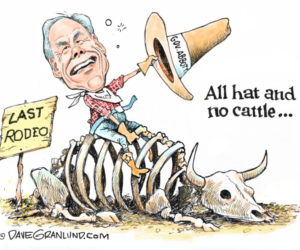
In 2026, we just experienced a blue wave. Trump may well have been the biggest winner in 2026. If there is anyone who can find a way to ride that wave, it is Trump.
Nearly 20 years later, Maher’s observation may be even more relevant to Donald Trump.
In 1992, many were writing the Republicans off. In 2004, many pundits were suggesting that the Democratic Party was past its heyday.
These days, the public and pundits are perhaps more reluctant to believe that the country has shifted permanently to the left or right. Yet many are still naively suggesting that this is the beginning of the end of Trump. MS NOW ran an article entitled “‘End of the Trump Era?’: Historic blue wave engulfs Trump.”
We’ve experienced the beginning of the end of the Trump era before, from his lagging poll numbers in 2016 to both impeachments to his defeat in the 2020 election. Yet Trump has repeatedly demonstrated an ability to turn what looks like an ending into another beginning.
CNN’s Van Jones declared that “he was happy, Trump was miserable.” Proceed with caution, Mr. Van Jones.
With a Democratic Congress, Trump no longer has to shoulder sole responsibility for advancing his agenda. Nor does he have to own every political consequence of his administration’s legislative battles. Instead, he gets something he is always seeking: a new target.
The people to whom Trump assigns insulting nicknames, such as “Crazy Bernie,” will now have a much larger platform. Senator-elect Abdul El-Sayed will no doubt attract attention as a progressive voice, giving Trump another opportunity to draw attention to what he characterizes as a “left-wing agenda.”
As Trump wields his veto power, political gridlock may become inevitable. But Trump has the potential to continue doing something he has sought to do from the start: transform politics into a political reality show. He can cast himself as Thor, the guardian of America, using his veto power as a political hammer to protect the country from what he portrays as a radical progressive agenda, including Medicare for All, “nanny-state” policies, allowing transgender students to use bathrooms corresponding to their gender identity, transgender women and girls participating in women’s sports, and overly lenient immigration policies.
Meanwhile, Senator Schumer, who is expected to become Senate Majority Leader next year, is hardly beloved by the progressive wing of his own party. In his book Positively American, Schumer made a case for appealing to centrists, independents, and the business community. His centrist approach could give him an opportunity to absorb some of the more radical elements of the left-wing movement, potentially tempering their influence within the party. It could also complicate Trump’s effort to portray himself as the normal, all-American guy standing between the country and a radical left-wing agenda. If Schumer pushes back against more radically progressive or socialist proposals in the Senate, such as Medicare for All, policies allowing transgender students to use bathrooms corresponding to their gender identity, or more lenient immigration policies, he may make it harder for Trump to claim that he alone represents the political center. At the same time, disagreements between Schumer and his party’s progressive wing could still create an opening for Trump.
Trump now has an opportunity to do what he does best: position himself as the supposedly normal, all-American guy standing between the country and a radical left-wing agenda.
It is a political role he has successfully played before. It is the role that got him elected both times.