











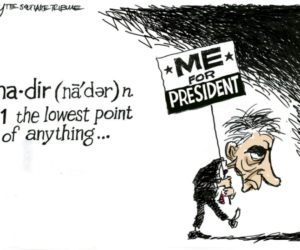
This year has not been a good one for the spread of democracy. From Pakistan to Kenya to Russia, democratic norms have been on a backwards slide. A recent Economist article suggests that the tremendous democratic gains experienced at the end of the Cold War are now slowing down to a crawl. It’s a dramatic reversal from a few years ago. Exciting developments in Lebanon, Palestine, Iraq, Ukraine, Afghanistan and Georgia suggested that maybe, as Dan Drezner wondered in 2005, a “fourth wave” of democratization was on the horizon.
But it wouldn’t be so. Authoritarian tendencies still continue to play a role in Eastern European politics, and Condi’s Middle Eastern birth pangs turned out to be nothing of the sort. In part, democratic regression — primarily in the Arab countries — has been a result of the end of the Bush administration’s “freedom agenda,” and the return to cold-hearted realism. Other factors besides American policies are at play, of course, but the failure to maintain a policy of reform promotion surely contributed to democracy’s poor showing in recent months. That said, The Economist offers a ray of hope about the arrival of democracy’s yet-elusive fourth wave:
…most people in most places still want democracy. This near-universal appetite is evident not only in what people say (even in conservative Muslim countries, where God-given sharia can be more popular than any law made by man, people tell opinion pollsters they want to elect their own governments). It is also reflected in what people do. Kenya’s voters turned out in droves and queued for hours under a scorching sun. So in recent years, and at huge risk to life and limb, have voters in Afghanistan and Iraq.