















I’m still thinking about Mississippi.
The election of a Black senator in that former sinkhole of racist repression is the marquee event of the 2026 midterms, and for me it stirs vivid memories of a long boozy dinner I had many years ago with the great southern writer Willie Morris.
When the networks called the Senate race for Scott Colom, I thought first and foremost about Medgar Evers (murdered) and Vernon Dahmer (murdered) and Lamar Smith (murdered) and Fannie Lou Hamer and all the little-known Black Mississippians who suffered violence while preaching the gospel of voter registration. This time around, braving Mississippi’s notoriously restrictive voting laws, Black turnout was robust enough to put Colom over the top.
But that’s not the whole story. It has long been a Mississippi axiom that no Black candidate could ever win a statewide election unless 25 percent of the white voters said yes. Well, guess what: Colom won 25 percent. That may not sound like much, but it was pivotal. It helped Colom win suburban Madison County, which Donald Trump won two years by 17 points. It helped Colom win Forrest County, which was named for Nathan Bedford Forrest, founder of the Ku Klux Klan.
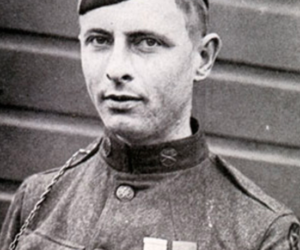
Which brings me to Willie Morris. The legendary memoirist-editor-professor is gone now, having passed in 1999, but in his time he was the quintessentially conflicted Mississippi white man, someone who deeply loved his native state and anguished with eloquence about its most vile manifestations. How thrilled he’d be to see so many white folks surmount the past and vote for a Black man.
I was roaming the state in 1988, “saving string” (in journalistic parlance) for some political stories, when I made it my mission to track down Willie. I’d long been enamored with his love-hate views on Mississippi as articulated in “North Toward Home” – a memoir that inspired many good ole boys and girls to ostracize him. Word was, I could find him most nights in the barroom of the Dixie Springs Cafe, where he liked to drink (and drink) and ruminate (and ruminate). So I drove for many hours through piney woods – and there he was.
We sat there until closing time. He chain-smoked Viceroys and drank Jack Daniel’s, and with minimum prompting, he voiced his angst about Mississippi,
Up in Yazoo City, his home town north of Jackson, Blacks were everywhere but somehow invisible. One memory still tortured him. He’d once accosted a three-year-old Black boy who was walking on the sidewalk with his sister, slapping him to the ground. Recounting the episode, he told me that “I’d clearly inhaled the air around me.”
It was the only reality he knew, and it was reinforced by the people in his community who loved him and whom he loved in return. By way of illustration, he told me a story:
“When I was 21, the White Citizens’ Council held a meeting in my home town to try and get Blacks to take their names off an NAACP petition calling for integrated schools. They mapped out the whole thing – how the banks would cancel Blacks’ credit and how landlords would throw them out. This was my town! All the leading citizens were there, including my father, God bless him. All the neighbors I grew up with. There are nuances that’d just break your heart.”
One by one, the 53 Black signers removed their names from the petition. The process took several weeks. They had no choice but to surrender. The Council had printed up cardboard placards, listing the names of all the signers, and had hung them all around town. White employers were firing the signers. White grocers were refusing to sell food to the signers. Black grocers who had signed the petition were no longer able to buy food from the white wholesalers. In the end, some of the signers simply left town, never to return.
Fortunately for Willie, he was a thinker who saw the big picture. He left Mississippi, studied abroad, championed integration as a Texas college kid, edited Harper’s magazine in New York, wrote his memoir – and it sure rankled the white establishment back home. Not long after I saw Willie, I was talking with a 68-year-old Mississippi farmer named Veazy King. When I brought up Willie’s name, Veazy huffed: “Oh Willie boy. He dredged things up that should’ve been dead years ago.”
During my visit back in 1988, I heard that a lot. Willie had no choice but to shrug it off. He told me, “We all love Mississippi, but sometimes it doesn’t love us back.”
But now – with the ascent of Scott Colom – there appears to be a greater measure of love.
The last thing Willie said to me, before he vanished into the pine-scented night, was this: “It’s up to the young people to reap the harvest from all this tragedy and move forward with intelligence, grace, and insight.” And so they did; 40 percent of white Mississippians under the age of 30 had the insight to vote for a Black man. That may not sound like much, but to Willie that would rock like an earthquake.
Perhaps in his place of rest he felt it.
–
Copyright 2026 Dick Polman, distributed exclusively by Cagle Cartoons newspaper syndicate.
Dick Polman, a veteran national political columnist based in Philadelphia and a Writer in Residence at the University of Pennsylvania, writes the Subject to Change newsletter. Email him at [email protected]