











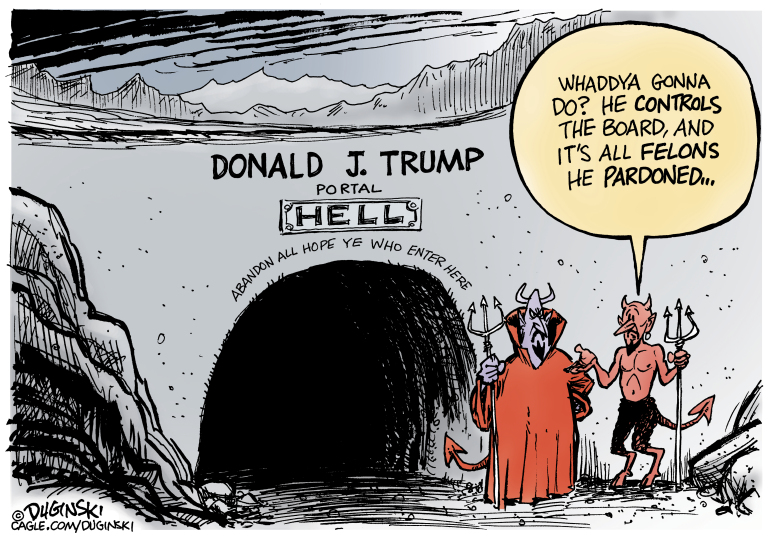
President Donald Trump and his supporters are testing the courts again. The pro-Trump Kennedy Center board has voted to put Trump’s name back up on Kennedy Center despite a judge’s order to remove his name.
The board of the John F. Kennedy Center for the Performing Arts voted on Thursday to inscribe President Trump’s name on the building beneath the main signage, according to two people with direct knowledge of the proceedings, aggressively testing a federal judge’s order.
According to the resolution approved by the Trump-allied board, the inscription underneath the institution’s name would read: “Restored and Renovated by President Donald J. Trump.” The board’s decision, which directs officials to act by “all legal means,” came shortly after it voted to move forward with Mr. Trump’s plan to shutter the building for renovations.
The president’s name was added to the building last year, but the judge ordered the letters taken down, finding that only Congress had the authority to change the institution’s name. The center removed Mr. Trump’s name in June but is appealing the ruling.
The move appeared to attempt to find a creative workaround to a provision in the federal law governing the Kennedy Center that says “no additional memorials or plaques in the nature of memorials shall be designated or installed in the public areas.”
In Thursday’s resolution, the board directed officials to honor Mr. Trump for bringing the center back “from the brink of disaster,” presenting a series of possibilities that included naming the center’s grounds the “President Donald J. Trump Plaza.”
“It is hereby resolved,” the measure said, “that the center desires to recognize and honor President Trump’s existential and unprecedented contributions to the survival of the center by all legal means.”
Both decisions will be subject to the scrutiny of the judge who, in response to a lawsuit from a Democratic lawmaker, found that the board had been “derelict” in considering the closure plan before approving it originally. Mr. Trump announced in February that the center would close for two years, with the objective of transforming what he called a “tired, broken and dilapidated” institution.
CNN’s Jeffrey Toobin calls the Trump action “an obscenity” but thinks he can win in court.
It’s absurd and Orwellian, especially considering he didn’t renovate it. He destroyed the Kennedy Center. I mean, that’s what’s so bizarre about this whole thing is he’s taking credit for something that he did the opposite of.
But legally, I think he might actually win because he is not technically changing the name. The other part of the order, the judge’s original order, said [the Kennedy Center] shut down for two years without any study. Now they have actually done some study and they think two years is reasonable. And so, I think he might actually win his case. But from a political or moral point of view, this whole thing is an obscenity.
The bottom line?
One of Trump’s defining political traits is persistence. When judges, prosecutors, or political opponents block one path, he frequently looks for another. Instead if treating an adverse court ruling as the end of the matter, Trump has often appealed, south legislative or administrative workarounds, or attempted to narrow the effect of judicial decisions. The Kennedy Center dispute fits the pattern. After a federal judge ruled that the Center could not legally be renamed for Trump without Congressional action, the Trump-backed board approved language the leaves the official name intact while adding an inscription crediting Trump and renaming the surrounding plaza–an apparent attempt to achieve much of the same political objective without directly violating the letter of the court’s order.
The same determination can be seen elsewhere.
Even after charges against David Hearn were dropped by interim U.S. Attorney Jeannine Pirro, Trump has continued pressing for renewed prosecution rather than accepting the outcome. Throughout his political career, Trump has repeatedly challenged unfavorable rulings through appeals, alternative legal theories, executive actions or political pressure instead of simply moving on.
Supporters see this as tenacity. Critics see it as an effort to wear down legal and institutional resistance. Whether this strategy ultimately succeeds is a more complicated question. Trump has certainly won some important legal and political battles by refusing to quit, while losing others after years of litigation. But his willingness to keep fighting has often changed the practical outcome, delayed enforcement, or forced opponents back in court.
The Kennedy Center controversy raises the same question once again: Is Trump merely testing the limits of the law, or is persistence itself becoming one of his most effective tools for working around court rulings?

Joe Gandelman is a former fulltime journalist who freelanced in India, Spain, Bangladesh and Cypress writing for publications such as the Christian Science Monitor and Newsweek. He also did radio reports from Madrid for NPR’s All Things Considered. He has worked on two U.S. newspapers and quit the news biz in 1990 to go into entertainment. He also has written for The Week and several online publications, writes a column for Cagle Cartoons Syndicate and has appeared on CNN.