






Shell game: the rule that made hidden owners transparent just died.
In early August, Capital One bank asserted in court that it had debanked accounts tied to Donald Trump businesses in 2021 because of account activity that triggered internal money laundering alerts. JPMorgan Chase had also closed Trump business accounts.
Less than two weeks later, the U.S. Department of the Treasury finalized a rule that exempted domestic persons from filing the documents that helped law enforcement identify illegal financial activity such as money laundering, human trafficking, terrorist financing, drug distribution and sanctions evasion.
That information had heretofore been opaque until Congress passed the Corporate Transparency Act (CTA, 2021) which amended the Bank Secrecy Act (BSA).
President Trump endorsed the measure in 2019.
Now Trump has gutted the transparency tools designed to assist the Anti-Money Laundering Act of 2020 (AMLA) while suing banks over the very AML infrastructure that banks relied upon to flag his accounts.
Coincidence? R-i-g-h-t. Does anyone believe in coincidence with this White House?
Banks toe the line with AMLA.
President Trump began ragging about anti-money laundering (AML) efforts early in his second term, about four years after his debanking had occurred. At the January 2025 World Economic Forum, Trump accused Bank of America and CEO Brian Moynihan of debanking conservatives in general.
In response, a Bank of America spokesperson noted that the company was “required to follow extensive government rules and regulations that sometimes result in decisions to exit client relationships.” In other words, things that look suspicious after months of investigation can lead to a bank saying goodbye to a customer.
That’s also similar to what Capital One and JPMorgan Chase told reporters.
However, by August 2025, Trump was claiming personal harm, saying “they [banks] totally discriminate against — I think me maybe even more — but they discriminated against many conservatives.”
Then on August 7, 2025, Trump issued an executive order titled “Guaranteeing Fair Banking for All Americans.” However, Nick Anthony, a policy analyst at the libertarian-leaning Cato Institute, told The Dispatch, “Frankly, I don’t find the argument that conservatives and Christians are being debanked en masse persuasive simply because we’re not seeing it.”
Financial institutions are beholden to the Department of the Treasury. “If a financial institution misses anything that’s suspicious, they can be held on the hook for that, they can get fined for that, and we see that happen,” Anthony told The Dispatch. “[F]inancial institutions are generally very risk averse when it comes to this type of thing.”
True to form, massive lawsuits.
Trump sued Capital One in March 2025 and JPMorgan Chase in January 2026. In both cases, he claims that the banks ended their relationship with him because of politics. Both banks have pointed to internal processes. Capital One cited BSA-mandated reviews designed to ferret out money laundering. The CTA is the section of the BSA that Congress added specifically to close the shell-company loophole in the AML framework. JPMorgan Chase told reporters it closes accounts that “create legal or regulatory risk.”
Money laundering is big business. The U.N. estimates that annual global money laundering is $800 billion – $2 trillion, 2-5% of global GDP. As much as $300 billion runs through the U.S. That’s why then-Sen. Marco Rubio (R-FL) called CTA “the most significant anti-corruption and money laundering law in decades.”
Weeks after his own bank invoked BSA compliance as its defense, Trump’s Treasury Department gave the CTA a radical makeover.
The CTA was designed to make a BSA compliance review more effective. Instead of banks having to go through hoops to try to identify owners in shell companies, the CTA required shell companies to provide that information to the government. The data reside with Treasury’s Financial Crimes Enforcement Network (FinCEN).
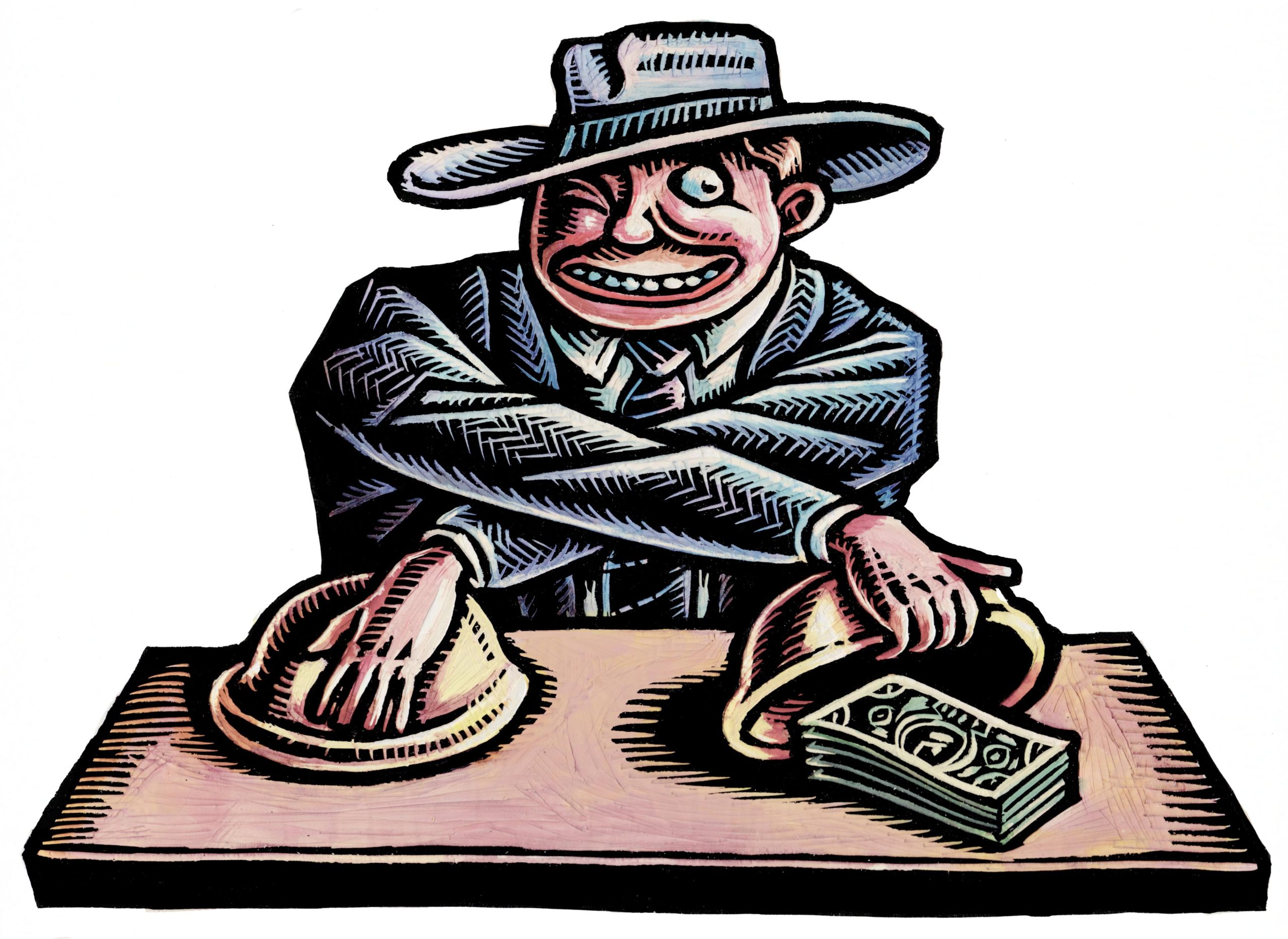
What is a shell company? Also known as a paper company, it has “no or nominal business operations and few or no assets.” The business form is often used for its ability to shield the identity of the owner(s). Shell companies may have legitimate purposes but are also used to perpetuate financial fraud.
The 2026 rule repeals the requirement that domestic companies and persons (which includes associations) must identify a “beneficial owner” (true owner), defined as an individual “who exercises substantial control over an entity” or owns/controls at least 25% of its ownership interests. Only some foreigners will be considered “beneficial owners” who are required to report to FinCEN.
Moreover, the new rule deletes ownership information that was already on file if Treasury “reasonably believes” the owner is a U.S. person. As former Rep. Tom Malinowski (D-NJ), a lead sponsor of CTA, said on X:
“Treasury deleting the beneficial ownership info it already gathered is utterly crazy. This database was not public — it was just for law enforcement to use in investigating crimes. It’s like Trump ordering the deletion of the FBI’s fingerprint database.”
If Rubio was right in his claim about CTA, this rule has effectively gutted “the most significant anti-corruption and money laundering law in decades.” The law remains on the books. The regulation simply ignores its directive to the executive branch.
That means the next time there is a Trump-like dispute among banks and clients over ‘was this AML or politics,’ there will be a lot less government infrastructure to test the arguments against.
It’s not just business that’s affected.
This repeal, however, has effects beyond corporations or family businesses. The CTA was widely supported by both parties, and indirectly it potentially increased transparency in money invested in domestic politics, which is verboten to foreign individuals and entities.
SuperPACs are a straightforward way for individuals and organizations to work around the caps on individual donations to candidates. SuperPACs are supposed to act independently of candidates and can accept money from shell corporations that successfully disguise the person behind the check.
In 2024, dark money hit about $2 billion in federal races, according to the Brennan Center for Justice. Dark money is defined here as groups that do not disclose their donors. SuperPACs in 2024 “had affiliated dark money groups that provided eight- or nine-figure sums.” If those groups were shell entities, law enforcement could trace the owners if it had justification.
Neither you nor I can find out who donated the funds and neither can the Federal Election Commission. But with the reporting requirements for shell companies that CTA imposed, those donor identities can become knowable by those who can access FinCEN with reasonable cause. It also means that foreign money might be traced when hidden by a domestic shell company.
Trump’s repeal of the rule implementing CTA isn’t just bad for law enforcement, it’s bad for democracy.
Follow the money? Not anymore.
This essay first appeared at Substack.

Known for gnawing at complex questions like a terrier with a bone. Digital evangelist, writer, teacher. Transplanted Southerner; teach newbies to ride motorcycles. @kegill (Twitter and Mastodon.social); wiredpen.com