













by Elwood Watson
Darializa Avila Chevalier, Ph.D. candidate and political novice, ran against and defeated Adriano Espaillat, a five-term member of Congress and leader of the Congressional Hispanic Caucus.
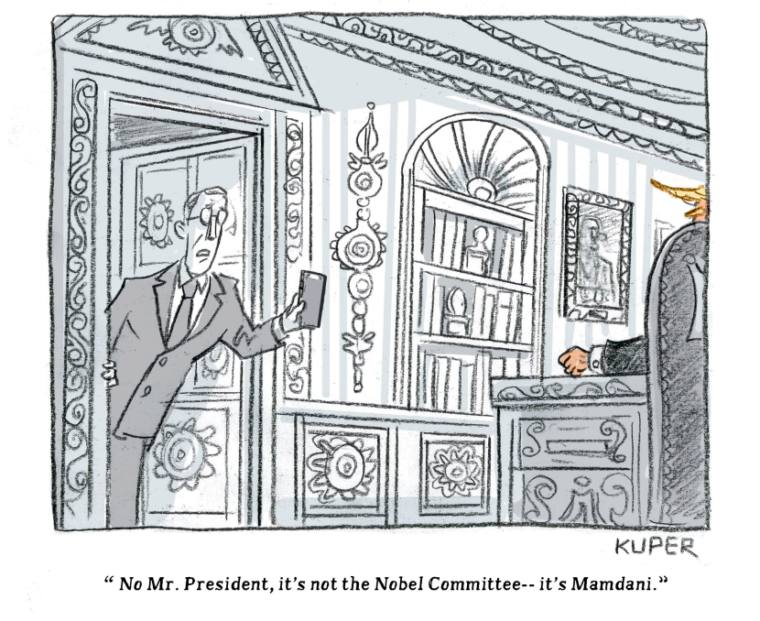
Espaillat had developed a political operation known as the “squadriano” in New York’s 13th District, which includes Washington Heights, Harlem, and parts of the Bronx. The majority of these communities are reliably progressive but not necessarily known for their radical politics. But Chevalier was powered by an endorsement from New York City Mayor Zohran Mamdani and bested Espaillat by about 2,000 votes.
Voters have realized the solution to handling Trump is not to continually pledge homage to the institutions and leaders whose failure resulted in his two presidential victories. Over the past decade, the left has created an ideologically dedicated voter base and a robust infrastructure through Democratic Socialists of America chapters that have been victorious in elections and established a strong competitive bench outside the more traditional Democratic base.
The bohemian-inspired districts were heavily composed of voters who were psychologically radicalized by Bernie Sanders and his “rage against the machine” campaigns. Because of such efforts, socialist candidates can now win in cities such as New York with Zohran Mamdani, Washington, D.C. with Janeese Lewis George, or Los Angeles with Marissa Roy. Strategic, long-term organizing has accelerated the left beyond its young, primarily White voter base, with the opportunity to secure victories across sizable majority Black and Latino constituencies that previous left-wing efforts could not achieve.
The sudden left surge is also based on a return to mass politics. For most of the 20th century, politics was based around crucial entities — unions, local parties, civic organizations — a real, civil society anyone could join and participate in that offered community and consensus decision-making. These entities have been dismantled in recent years, supplanted by atomized politics ruled by cabals of elected officials who do the bidding of plutocrats with no genuine roots among the masses.
The past two months should awaken the Democratic Party and its leadership to the high, infectious energy emanating from its left wing. Democrats have made it clear that they want fighters and the sort of old school politics that was invested in the collective struggles of the masses, not decided by a few elites in smoke infested rooms. Democratic centrist voters are still an important constituency to keep pacified, but the party’s leadership is deeply at odds and out of touch with its base. A strong, radical leftist wave is powering across the nation.
The current electorate in both political parties is furious, and now it’s the conservative right that hates the business-as-usual approach to politics. Much of the Democratic establishment has proved itself dreadfully inept. Previous anti-ICE positions were viewed as fringe and irrational. However, when Trump eventually transformed the agency into something reminiscent of his own private army, a plurality of voters wanted to scrap it. The real and major question is what lessons those representing the left have learned from the past several years that have been less than politically fruitful.
There’s now a democratic socialist mayor in Seattle, and a democratic socialist recently won the primary to become mayor of Washington, D.C. In northern New England, Maine candidate Graham Platner, who, like Avila Chevalier, has a less than pristine social media history, soundly defeated the state’s governor, Janet Mills, for the Senate nomination. Additionally, voters in Maine’s rural Second District, which Trump won by nine points, chose progressive Matt Dunlap to run for the House seat of outgoing centrist Democrat, Jared Golden. Such results are not merely coincidental.
A transformation in urban politics itself lies beneath this generational change. The shift to the left has been notable in urban centers. Over the last decade, the left has created a strong, solid ideological base in urban areas that are increasingly the governing or opposition faction in most major cities. A millennial generation that is now aging into a majority. The radicals of a decade ago are now becoming parents themselves and members of school boards and PTAs.
Many Democratic voters are in no mood for acquiescence. As they see it, a tepid party structure has repeatedly failed them, and they have decided to divorce them politically. Voters are hungry for bold, visionary leadership.
As several pundits have proclaimed, the Democratic version of the Tea Party has arrived with unalloyed implications for the midterms and the 2028 presidential election. Zorhan Mandami noted at a rally at Brooklyn’s Kings Theater what people are asking when the race for 2028 begins. “It starts now,” he said.
If recent mayoral and state elections are any indication, at least for the moment, the mayor is right on target in his assessment.
Copyright 2026 Elwood Watson, distributed by Cagle Cartoons newspaper syndicate. Elwood Watson is a professor of history, Black studies, and gender and sexuality studies at East Tennessee State University. He is also an author and public speaker.