



By Jennifer Mercieca
People across Europe are taking to the streets to express their frustrations over high food prices, unaffordable housing, stagnant wages, and declining public services. Americans are frustrated too, and those same affordability concerns are the top issue in this year’s midterm election.While we’re not in the streets (yet), frustration over affordability here is so severe that itthreatens the viability of the American Dream—and potentially America itself.
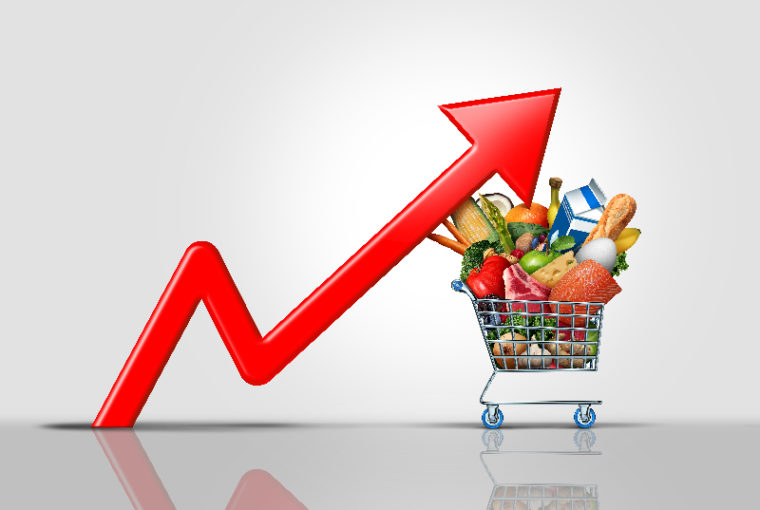
If the American Dream was a promise made by the nation to its workers—the promise that if youworked hard, then you could achieve economic security—then that promise is broken. Americais much less affordable than it was a few generations ago. This is true for everything from dinnerat McDonald’s for a family of five—which cost the equivalent of three hours of minimum wagework in 1955, and today costs nearly an entire eight-hour work day—to buying a home—whichis less than half as affordable for the average family today compared to 1960.
“Affordability” is the gap between what things cost and what you can afford to spend, yes, but it’s more than that. Affordability is a capacious political term that describes a series of shortfalls: the gap between the ultra-rich and everyone else, the gap between how economists talk about the economy and people’s everyday experiences, the gap between a “poverty wage” and a “livable wage,” the gap between what politicians promise on the campaign trail and what they deliver in office, and the gap between the promise and the reality of achieving the American Dream in the 21st century. Affordability is the political issue of our time, a crisis that isn’t going to end unless we understand and address all of those gaps. In today’s political discourse “affordability” is another (perhaps less obviously strident) way to say that for a lot of people (maybe most), capitalism feels broken.
How did we get here? Looking at the language we use to talk about the economy offers some clues.
National economic conditions are difficult to generalize because the economy is complex, and information about the economy is hard to synthesize into an easy-to-comprehend narrative. Personal economic conditions are also difficult to generalize because people do not have the exact same economic circumstances—thanks to differences in age, income, debt, savings, family size, housing status, regional cost of living, and expenditures. That double complexity means that it’s easy to mislead with economic statistics. Financial news often focuses on the performance of stock markets, the cost of gas or eggs, or inflation or unemployment metrics when it attempts to convey the complexities of economic information.
But focusing on any one of those factors—or even all of them—still doesn’t tell a complete story. No one of those parts can ever stand for the whole. Typically, that’s the kind of situation that calls for a metaphor. A metaphor is what 18th-century rhetorical scholars George Campbell and Giambattista Vico, respectively, called “an allegory in miniature” and a “fable in brief.” Metaphors are compact little nuggets of narrative that work by comparison (comparing a known and easily recognizable thing to an unknown or difficult to
describe thing). The “metaphors we live by,” explain George Lakoff and Mark Johnson, shape our very thought.
Economists represent their thinking in equations, charts, and graphs that are difficult to translate into paragraphs. Translating those graphs into paragraphs is an act of metaphorical representation—in this case, using words to describe data trends. The most common metaphor used to describe today’s economy is the letter “K,” where “K” stands for the shape of a graph showing how “the rich get richer and the poor get poorer”; how the “U.S. stock market hits new highs,” as an Associated Press headline read on May 26, 2026, as “2 of 3 Americans are cutting back on spending.” The “rich get richer and the poor get poorer” K-shaped metaphor tells a story that resonates with a lot of Americans’ experience—opinion polls repeatedly find that frustration with the economy is rampant. “Affordability” is the word that captures that K-shaped metaphorical narrative in political discourse.
Affordability is an interesting word because it describes a literal gap (between what things cost and what you can afford) but it also describes a rhetorical gap between the bureaucratic and technical language of professional economists and investors (those who speak about “national economic indicators” or “stock market gains”) and the vernacular language of people who worry about “bills” and “rent” and “utilities” and “prices” and “interest rates”—people who know the ins and outs of “side hustles,” “buy now, pay later,” “food banks,” “pawn shops,” “gig work,” “GoFundMe,” and “payday loans.” There are terms that attempt to bridge the rhetorical gap: “cost of living” or “making ends meet,” perhaps, but those phrases don’t get at the real thing, which is that K-shaped gap. Affordability in America is a K-shaped story.
Affordability as a political project is about giving Americans—all Americans—the power to choose how (and whether) they spend their money. The rent is too damn high, but so is the healthcare. The rent is too damn high, but so is the childcare. The rent is too damn high, but so are the groceries, the gas, and the utilities. Everything is too damn high, and Americans have no choice but to pay, charge their credit cards, or buy now, pay later—which is to say, Americans have no choice at all. As a political project affordability asks: “Why don’t we have better choices in the land of the free?”
So how can we understand America’s “affordability crisis” and how we talk about the economy?
We can define the terms, examine the stats, and tell the stories. But we make sense of the terms, stats, and stories by putting them into a larger context: America’s affordability crisis is violation of trust, a violation of the bargain of the American Dream. In the land of the free, Americans feel trapped. In the home of the brave, Americans are frustrated, stressed, and worried. American political leaders have promised repeatedly to make America more affordable and to make the American Dream possible again, but things have steadily gotten worse. America’s affordability problem has fueled outrage, instability, and
extremism.
In the nation’s 250th year, a lot of Americans feel left behind, and they fear our best days are behind us. The affordability crisis is an existential crisis for America. The affordability issue isn’t just about Americans’ personal finances.
It’s a national crisis of broken trust.
Jennifer Mercieca is a historian of American political rhetoric, professor of communication and journalism at Texas A&M University, and a contributing editor at Zócalo Public Square. ID 320881446 | Affordability ©
Skypixel | Dreamstime.com