






U.S. President George W. Bush is – of course – still in South America in an attempt to improve America’s image, to (potentially) help South American governments and to limit the influence of certain hostile leaders / countries (like Chavez).
Two interesting articles were published in the Washington Post recently, one today about Bush’s visit to Guatemala and one on March 9, by Marcela Sanchez, and about Bush’s “other half” – the one addressing poverty, helping people and regions develop (economically), etc., instead of the one that’s, in Steven Hadley’s words, “counter-terror, trade and counter-narcotics.”
Sanchez touches on an important subject, namely: (the causes and potential remedy for) anti-Americanism in South America. As people who visited South America and / or those who simply try to keep track of developments there, know, as the commenter who sent me the links to these two articles Christine Stanley, pointed out, anti-Americanism is very strong and growing in most, if not all, South American countries.
How to counter anti-Americanism in S.A.? How to improve America’s image? Bush initial attitude / policy was the tough one the world soon got used to seeing: very confrontational, advocating free trade, globalization, capitalism, etc. The problem: many South Americans blamed capitalism, free trade, etc… and the U.S., for its problems, most importantly for, in Sanchez’s words, ‘the “scandal” of persistent poverty and inequality.’
The U.S. “has not been disengaged from Latin America”, but “its engagement has taken the wrong approach.” It is time for Bush to change his approach and… he has. He seems to be “borrowing a page from the Clinton years to counter anti-Americanism abroad.” Sanchez explains in that regard that ‘back in the late 1990s when globalization had generated so much bitterness toward the United States that McDonald’s restaurants were being attacked in France, Felix G. Rohatyn, the U.S. ambassador at the time, sent diplomats out from the embassy in Paris to make themselves available to the French people. The initial goal wasn’t to change minds, Rohatyn told me recently, but “to have an exchange of views” and to articulate the logic behind U.S. policy.’
So, ‘the State Department will soon be opening six American Presence Posts in Latin America as part of Secretary of State Condoleezza Rice’s efforts to get “more Americans onto the diplomatic front lines of the 21st century.” Like Rohatyn’s diplomats, they will be living and working outside the embassy and will counter animosity through more direct communication.’ The goal, quite clearly, is to improve America’s image by returning to “true diplomacy”, which is a victory “for those in the administration who know that empathetic engagement will be a more fruitful tactic.”
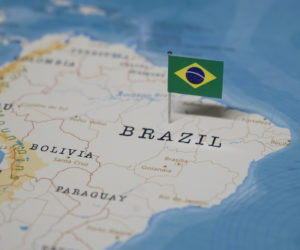
Bush put the new approach into practice in Guatemala, Brazil, Colombia and Uruguay:
His stops Monday include a U.S. military program to provide medical services and an agricultural cooperative for indigenous farmers whose irrigation system was built with U.S. said.
[…]
“It’s very important for the people of South America and Central America to know that the United States cares deeply about the human condition and that much of our aid is aimed at helping people realize their God-given potential,” Bush told reporters in Bogota, Colombia, before flying to Guatemala on Sunday night. “And so we’ll talk about programs all aimed at giving people a chance to realize their dreams.”
[…]
His first stop Monday morning was a school in Santa Cruz Balanya, a town of 10,000 where the U.S. Southern Command is conducting a medical readiness and training exercise. In such exercises, U.S. military doctors team up with local physicians for several days to provide medical, dental, surgical and optometric services for underserved rural areas. About 83,100 patients have been served this way in Guatemala over the past six years, according to U.S. officials.Accompanied by first lady Laura Bush, the president also will visit Labradores Mayas, an agriculture association for 66 local farmers. A loan and technical assistance from the U.S. Agency for International Development in 1986 built an irrigation system that today has made it possible for such associations to sell products to supermarket chains, including Wal-Mart Central America, U.S. officials said.
I have argued in the past (at The Moderate Voice) that the U.S. should invest big-time in Latin America if it wants to prevent Chavez and his buddies from taking over there. Socialists like Chavez will cuddle up to America’s enemies, like Iran and China. Whether Americans like it or not, America has to invest in South America – if it does not, big problems will arise in the coming years: anti-Americanism will increase, anti-American politicans will take over and China and Iran will increase their influence dramatically in the region…
The place to go for all things foreign is the great website Watching America. The people from Watching America translate foreign articles that appeared in foreign newspapers, written in a foreign language. Two articles I would like to highlight:
This article that originally appeared in Diario Decuyo (Argentina). It perfectly highlights the anti-Americanism and rhetoric of Hugo Chavez. Some excerpts:
Of Bush he said, “No to the imperialist presence in the heroic lands of our America!” affirmed Chavez, who considers the United States President a “true political cadaver that not only smells of sulfur but has the scent of a dead politician who will soon be transformed into cosmic dust and disappear from the scene.”
Chavez laid claim to the slogan of Eva Perón : “The country will be free or the flag will burn amongst its ruins. To live free or die is our slogan,” he added. “We don’t have a choice in Latin America today: live free or die.”
[…]
“Union was the word used by our founding fathers Simón Bolivar and José de San MartÃn ,” while integration, he said was a term, “the messengers of the North brought from Washington to accentuate imperialist control and to subjugate 19th and 20th century governments.”“Kirchner and I are products of the same historical crisis: of the reaction of the people against the domination of native elites who delivered [Latin America] to the empire.”
After Guatamala Bush will visit Mexico before going back to the U.S. again.
[…]
“North America for the North Americans and South America for the South Americans. This is our America.”
The second article, that originally appeared in El Tiempo (Colombia), emphasized the need for open dialogue and for understanding. In essence: Colombians don’t understand the U.S., and Americans don’t understand Colombian ‘Latin Americans’.
This post has been cross-posted at my own blog.
P.S.
To Christine, who requested this post: I hope you’re satisfied.
