














WASHINGTON — It turns out that there is at least one question on which Mitt Romney is not a flip-flopper: He has a utopian view of what an unfettered, lightly taxed market economy can achieve.
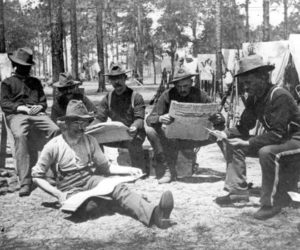
He would never put it this way, of course, but his approach looks forward by looking backward to the late 19th century, when government let market forces rip and a conservative Supreme Court swept aside as unconstitutional almost every effort to write rules for the economic game. This magical capitalism is the centerpiece of Romney’s campaign, and it may prove to be his undoing.
Here’s Romney’s problem. His best strategy is to cast President Obama as a failure because the economy has not come all the way back from the implosion of 2008. The most effective passages in his well-reviewed speech after his Tuesday primary victories were about the shortcomings of the status quo.
“Is it easier to make ends meet?” Romney asked. “Is it easier to sell your home or buy a new one? Have you saved what you needed for retirement? Are you making more at your job? Do you have a better chance to get a better job? Are you paying less at the pump?”
And there was the line pundits were bound to love that played off James Carville’s memorable utterance from Bill Clinton’s 1992 campaign. “It’s still about the economy,” Romney said, clearly relishing the moment, “and we’re not stupid.”
But Romney, unlike Clinton, is not offering a program through which government would take specific steps to solve the problems he catalogs. Instead, he is calling on voters to share his faith that our difficulties would go away if the state simply got out of the way, allowed the market do its thing, and counted on the success of the successful to lift up everyone else.
Romney is right in saying he has “a very different vision” from Obama’s, and this is where the magic comes in. He envisions “an America driven by freedom, where free people, pursuing happiness in their own unique ways, create free enterprises that employ more and more Americans. And because there are so many enterprises that are succeeding, the competition for hardworking, educated, skilled employees is intense, so wages and salaries rise.”
Just like that, all would be well — as if we never needed the trust-busting of the Progressive Era, the social legislation of the New Deal, the health programs of the Great Society, and the coordinated action of the world’s governments in 2008 and 2009 to keep the Great Recession from becoming something far worse.
This is Romney’s true radicalism. I suspect it is a principled radicalism. And exposing its implications will be Obama’s opening to make the campaign about something other the economy, stupid. Romney’s speech on Tuesday was every bit as important as his supporters said it was. It contained both the foundation of an effective campaign based on the electorate’s discontents, and the basis for undermining the very argument Romney wants to make.
Romney’s philosophical inclinations give the president ample room to speak to non-ideological, non-utopian voters, the 10 percent or 15 percent who will decide this election.
They may not like government very much, but they are also wary about what capitalism does when the watchdogs fall asleep. They don’t cotton to further tax cuts for the wealthy. They reject the idea that worrying about how unequal the rewards in our society have become is the same thing as being “envious” of those who have done well. They are fully onboard that opportunity and not “entitlement” is the American way. But they rather welcome the help — low-interest student loans, for example — that government can offer to those looking to rise and prosper.
That’s why Romney’s shift to Obama’s side in the president’s battle with House Republicans over student loans may be his most instructive flip-flop yet. It shows that Romney will do all he can to soften his underlying radicalism. His goal is to deprive Obama of ways to reveal the concrete impact of free-market utopianism — and the price of the cutbacks Romney embraced by endorsing Rep. Paul Ryan’s budget.
What Romney has going for him is a journalistic presumption that he is either a closet “moderate” or so opportunistic that he is altogether lacking in a coherent worldview. The first is wrong. The second is unfair to Romney. What he believes matters, and it is the biggest obstacle between him and the White House.
E.J. Dionne’s email address is [email protected]. (c) 2012, Washington Post Writers Group