





In a brief address, President Trump touted U.S. military success and energy dominance while repeatedly describing Iran as “no longer a threat,” despite his vow to continue military action in the coming weeks.
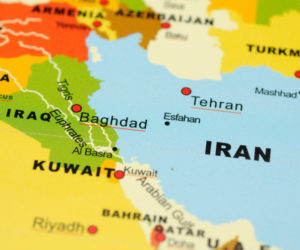
President Trump delivered a pointed update Tuesday on “Operation Epic Fury,” the U.S. campaign against Iran, repeatedly declaring Iran “decimated” while also promising continued military strikes. He called Iran the “number one sponsor of terrorism” and claimed its naval forces were “non-existent,” its air forces “in ruins,” and that Iranian leaders were all dead. “Never in the history of warfare has an enemy suffered such losses,” Trump said, framing the operation as unprecedented.
Trump tied the Iranian strikes to past attacks, including the 2000 bombing of the USS Cole, and accused the Iranian government of killing 45,000 of its own civilians. He also blasted former President Obama, referring to him as Barack Hussein Obama (omitting the title President) and accused Obama of giving Iran billions of dollars through his nuclear deal in an attempt to “buy Iran’s respect,” but instead making Iran “laugh at the U.S.” Trump argued that Israel would not currently exist, and that Iran would have missiles in striking distance of the U.S. and Europe had he not terminated Obama’s deal. He reasserted that Iran was on the doorstep of having a nuclear weapon, emphasizing that the losses inflicted were “never been done before.”
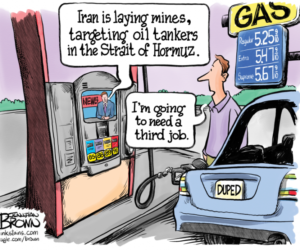
The president highlighted U.S. strength in energy, recalling the “Drill Baby Drill” slogan and asserting that the U.S. now produces more oil than Saudi Arabia and Russia combined. He called the attacks on Iran a “decapitation” and encouraged other countries to “take oil from the Strait” for themselves, framing the U.S. as a dominant force in global energy markets.
Acknowledging the 13 U.S. service members killed during the operation, Trump said the families asked him to “finish the job.” While regime change was not officially the U.S. objective, he asserted the new Iranian leadership was “less radical” and declared the U.S. “unstoppable.” Trump promised further strikes in the coming weeks, saying he would “send them back to the stone ages where they belong.”
He said the U.S. had been conducting a “brilliant” military operation against one of the world’s most powerful countries for 32 days, and argued that, as a result, Iran was no longer a threat, notwithstanding his earlier vow to continue military action in Iran. Trump’s update contained multiple contradictions, as he frequently described Iran as “decimated” while also pledging additional attacks, leaving questions about how and when the conflict would actually conclude.
Towards the end of the speech, Trump referenced past U.S. wars, citing their exact durations: World War I (one year, seven months, five days); World War II (three years, eight months, 25 days); Korean War (three years, one month, two days); Vietnam (19 years, five months, 29 days); and Iraq (eight years, eight months, 28 days). He then compared all these previous conflicts to Iran, where the U.S. had been conducting a “brilliant” military operation against one of the world’s most powerful countries for 32 days. This implied the conflict was over, notwithstanding his earlier vow to continue military action in Iran.
Trump concluded by restating that the U.S. would be safer than ever once Operation Epic Fury was complete. He framed the operation as a turning point in U.S. military engagement abroad, emphasizing that it marked a significant strategic achievement. By combining military success, energy independence, and sustained pressure on adversaries, Trump presented the operation as both a defense of national security and a demonstration of American power on the global stage.