










China has now served notice on the United States: the “good old days” of borrowing are over:
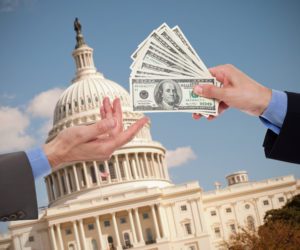
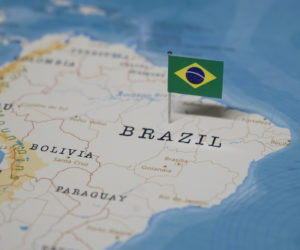
China bluntly criticized the United States on Saturday one day after the superpower’s credit rating was downgraded, saying the “good old days” of borrowing were over.
Standard & Poor’s cut the U.S. long-term credit rating from top-tier AAA by a notch to AA-plus on Friday over concerns about the nation’s budget deficits and climbing debt burden.
China — the United States’ biggest creditor — said Washington only had itself to blame for its plight and called for a new stable global reserve currency.
“The U.S. government has to come to terms with the painful fact that the good old days when it could just borrow its way out of messes of its own making are finally gone,” China’s official Xinhua news agency said in a commentary.
After a week which saw $2.5 trillion wiped off global markets, the move deepened investors’ concerns of an impending recession in the United States and over the euro zone crisis.
Finance ministers and central bankers of the Group of Seven major industrialized nations will confer by telephone later on Saturday or on Sunday, a senior European diplomatic source said.
Xinhua called for the printing of US dollars to be supervised internationally and repeated China’s contention that a new global reserve currency might be needed.
Analysts say neither suggestion is likely to happen. But China – the world’s largest holder of US debt – is clearly worried about its holding and also worried about criticism at home for holding so much of the country’s savings in US investments.
“The spluttering world economic recovery would be very likely to be undermined and fresh rounds of financial turmoil could come back to haunt us all,” it said.
It said the US should stop “letting its domestic electoral politics take the global economy hostage”.
In the wake of the downgrade, a European diplomatic source told Reuters news agency that the G7 group of major Western powers would confer by telephone in the coming days.
Francois Baroin, Finance Minister of France – which currently heads the G7 – said he had consulted his counterparts on Saturday morning and would closely monitor market reaction when they opened on Monday.
EU Economic and Monetary Affairs Commissioner Olli Rehn, who cut short his summer holiday to return to Brussels, said the world’s major economies should co-ordinate their policies to avoid a global crisis.
What does all this mean? Michael West in Australia’s Sydney Morning Herald:
When markets open for trade again on Monday morning, this will be but one of a host of things already rattling confidence. The turbulence on world markets at the moment boils down to two basic factors: one, soaring debt levels in Europe as well as the US, and two, rising fears the world is heading back into recession.
We emerged from recession only two years ago in the wake of the global financial crisis – ”we” meaning the world, not Australia, whose fortune as a low-debt, big commodity producer for China quarantined us from recession. But the trillions spent by governments around the globe to stimulate a recovery has simply turned into humungous debts.
Governments borrowed to finance their assorted ”cash splashes” and stimulus programs. The measures were designed to make people spend more and revive the economy.
Instead, people saved more. Now recovery looks in doubt. Hence the tremendous disappointment and loss of confidence in world markets over the past couple of weeks. These concerns dwarf the S&P downgrade, which is largely symbolic. S&P’s two rival credit agencies, Moody’s and Fitch, had already announced they would keep their triple-A ratings.
Moreover, the ratings agencies are struggling to regain credibility following their ”colossal failure”, as one congressman described it, during the financial crisis of 2008. Before the stockmarket boom, only the cream of sovereign states and a handful of big blue-chip banks attracted triple-A ratings. In the boom years, though, the agencies began to sell triple-A ratings to investment bankers for their financial products. It famously emerged at a congressional inquiry that they would ”rate a cow” if paid.
There will be some direct financial market implications of the S&P downgrade. Many investors are bound by rules and charters which restrict them to holding triple-A-rated investments. And as the rating on US government bonds, according to one agency, has now been lowered there will be some tweaking of investments and portfolios.
Overriding this, however, will be the fact the US has become even more of a ”safe haven” for worried investors during the turmoil of the past week. US bonds, despite the S&P downgrade, were the world’s best performing investments last week. As sharemarkets dived 5 per cent to 10 per cent around the world, US bonds rallied by the same magnitude.
The paradox is – and S&P has just reaffirmed this – the US is higher risk these days; still, in the past week when people hit the panic button they still sent their capital to the US.
And China’s rise?
In the longer term, many will dread China’s rise. It has often been said that ”whoever controls the debt controls the asset”. And if China began to sell down its $1000 billion holding in US treasuries, the world would really have a problem.

Joe Gandelman is a former fulltime journalist who freelanced in India, Spain, Bangladesh and Cypress writing for publications such as the Christian Science Monitor and Newsweek. He also did radio reports from Madrid for NPR’s All Things Considered. He has worked on two U.S. newspapers and quit the news biz in 1990 to go into entertainment. He also has written for The Week and several online publications, writes a column for Cagle Cartoons Syndicate and has appeared on CNN.