















by Charles Sauer
Candice Odgers gave both of her daughters smartphones for their eleventh birthdays and even let her youngest daughter use Snapchat.
You might be shaking your head and wondering why she would be so reckless. Hasn’t she read the work of experts regarding how social media damages children’s mental health? Well, not only has she read those studies, she analyzed them and found the case for restricting minors’ access to social media does not hold up under scrutiny.
In addition to being a mother, Odgers is a professor of developmental psychology who has studied adolescent mental health for 25 years. Not only does she not think social media is the main cause of children’s mental health problems, she believes laws forbidding children below a certain age from accessing social media “are likely to make things worse, not better.”
One reason Odgers opposes forbidding minors from using social media is that they can easily get around the bans. A study published by the British Medical Journal found that over 85% of Australians under 16 are still using social media even though the government banned them from opening accounts. As Odgers notes, “the more we make it a forbidden place to spend time, the less likely they [children who use social media] are going to tell us what’s happening in those spaces, the less likely they will be to report harms, the less likely we will be to help them.”
Odgers has been working with children between the ages of 10 and 14 since 2008. A large portion of her work involves examining their social media use to see how they spend their time online and how it affects things like their sleep and exercise. Her research and the research of others has convinced her social media plays a small role in the recent increase in the number of children experiencing mental health issues. Odgers identifies several factors more likely to cause childhood mental health issues then social media, such as “the recession, rising adult mental health issues, the Covid pandemic and, in the U.S., opioid addiction.”
Social media may have actually helped children avoid depression and other problems during the Covid lockdowns by providing them with a way to keep in touch with their peers. Odgers also points out that, instead of causing young girls to become depressed, many girls turn to social media to help them deal with existing depression. Odgers also points out many victims of cyberbullying are also bullied offline. These facts back up her contention that social media “is one of the least influential factors” in teen depression.
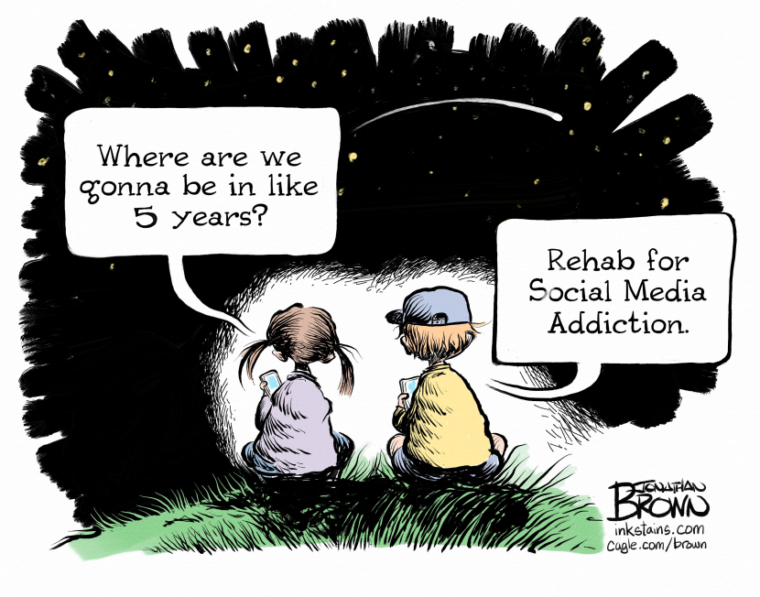
Those who advocate banning children from social media claim children do not spend enough face-to-face time with their peers. This claim has been debunked by a University of Florida study which found that children with smartphones are more likely to use FaceTime, allowing them to interact more with their friends than children without smartphones. The study did find teenagers who regularly post on social media suffer from depression and sleep deprivation. However, the solution to problems caused by excessive social media use is not legislation. A child’s access to social media should be controlled by those who know child best, their parents.
Fortunately, there are a number of tools available to help parents control their children’s online access. Every major social media platform, gaming site, and search engine offers parental controls. There are also products that allow parents to monitor and control their child’s online activities, as well as cellphones that only allow users to talk and text.
Odgers is not motivated by a libertarian commitment to limited government and free markets. She favors increased government spending funded “with a big old tax on tech” to, among other things, construct improved “communities and physical spaces for children to play and learn.”
When it comes to social media effects on children, the research shows the negative effects are grossly exaggerated while the benefits are often overlooked. She may not be a libertarian, but her fact-based conclusions regarding what politicians should do regarding children’s usage of social media will warm the hearts of all libertarians (and Seinfeld fans) – the politicians should do nothing.
Copyright 2026 Charles Sauer, distributed by Cagle Cartoons newspaper syndicate. Charles Sauer is the president of the Market Institute and the author of “Profit Motive” Sauer can be reached at [email protected].