



European security and political leaders sighed with relief at Secretary of State Marco Rubio’s conciliatory tone at the influential Munich Security Conference (MSC) on Saturday but their skepticism, bordering on distrust of US intentions, remained unchanged.
They clung to their overall decision to seek military and economic autonomy from US tutelage that has felt like vassalization to some countries, including Britain, France and Germany, the chief European security powers.
Europe’s increasing rift from the United States at the MSC has begun sounding the knell of the so far mostly unchallenged dominance of Washington’s influence over world affairs.
Whether this will destabilize geopolitics will become clearer in coming months. But President Donald Trump has opened the Pandora’s box by his controversial stewardship of post-World War II transatlantic relations, which long empowered American presidents to be world hegemons.
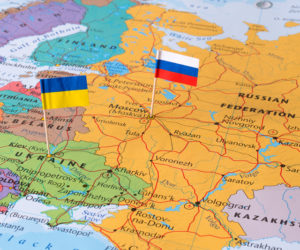
Rubio made a valiant effort in Munich to pledge the Trump administration’s fidelity to Europe’s fearful nations panicked at Russian Vladimir Putin’s relentless four-year invasion of Ukraine, which is now a horrific war of attrition.
The war’s heavy toll on Ukrainian civilians in addition to deaths and casualties estimated by some as exceeding 1.5 million soldiers on both sides weighs heavy on Europe’s conscious. Particularly as, its countries have neither sufficient wealth nor military power to enable Ukraine’s Volodymyr Zelinsky to turn the tide.
Europeans at the MSC were seething with frustration at Trump’s refusal to furnish further billions in funds and more heavy weapons like costly anti-missile interceptors and lethal Tomahawk missiles capable of striking deep inside Russia. They seem to think that Trump’s apprehensions about provoking a nuclear Third World War are misplaced.
Many in Rubio’s audience voiced relief at his reassurances that the US will never forsake its NATO allies. But, privately, they seemed crestfallen that Trump refuses to go to war for Ukraine, which is not a NATO member, despite their collective distrust of Putin.
Offering comfort emotively and to applause, Rubio proclaimed, “So, in a time of headlines heralding the end of the transatlantic era, let it be known and clear to all that this is neither our goal nor our wish – because for us Americans, our home may be in the Western Hemisphere, but we will always be a child of Europe.”
However, his warmth was diluted by a warning, “For we in America have no interest in being polite and orderly caretakers of the West’s managed decline. We (seek) to renew the greatest civilization in human history.”
“And while we are prepared, if necessary, to do this alone, it is our preference and it is our hope to do this together with you, our friends here in Europe.”
Yet, in the same breath, he set conditions: “And this is why we do not want our allies to be weak, because that makes us weaker… This is why we do not want our allies to be shackled by guilt and shame. We want allies who are proud of their culture and of their heritage.”
Rubio spoke in gentler tones than Vice President JD Vance’s thunderbolt speech at the MSC last year but he repeated the key points made then about the threats to European civilization from mass migration, drug cartels and complacency. He repeatedly noted the common Christian roots of Americans and Europeans, an emphasis distasteful to many in Europe because that alludes indirectly to the West’s White people and their religion’s predations around the world during the colonial era.
It remains to be seen whether the emerging divide between the US and key European powers like Britain, France and Germany will widen to a rift. But Friedrich Merz, the Chancellor of Germany which has long been a pleasant Washington acolyte with about 50,000 US soldiers still on its territory, was uncharacteristically blunt.
Alluding to the Munich Security Report 2026 entitled “Under Destruction” (referring to the rules-based global order) he declared, “I’m afraid we have to put it in even harsher terms: This order, as flawed as it has been even in its heyday, no longer exists.”
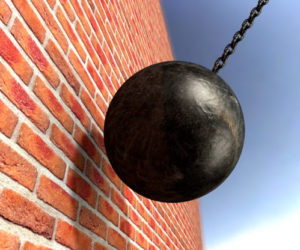
The report proclaims: “The world has entered a period of wrecking-ball politics… As a result, more than 80 years after construction began, the US-led post-1945 international order is now under destruction.”
President Emmanuel Macron, President of loyal US ally France, exhorted. “This is the right time for a strong Europe. Europe has to learn to become a geopolitical power…Europeans must start this work with their own thinking and their own interests”.
America’s privileged “Five Eyes” intelligence ally, British Prime Minister Kier Starmer declared, “It is clear we (Europeans) must build our hard power, because that is the currency of the age.”
ID 36813940 ©
Albund | Dreamstime.com