










By Samuel de Korte
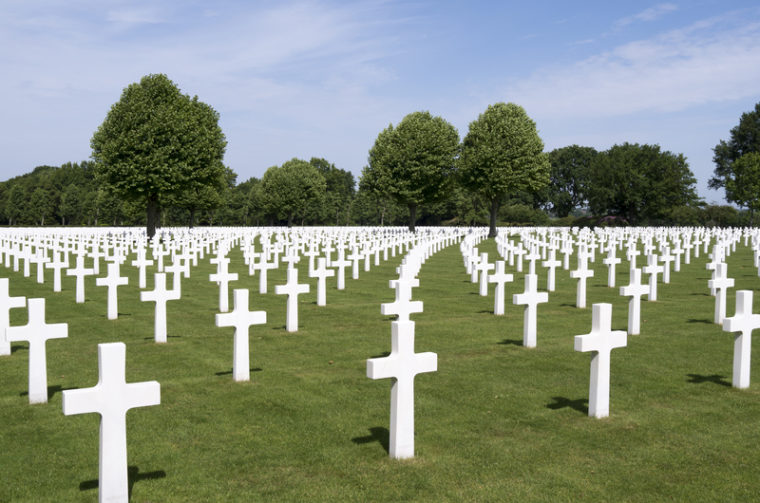
When The Moderate Voice first covered the quiet removal of panels (update here) honoring Black World War II soldiers buried at the Netherlands American Cemetery at Margraten, the question was whether Trump administration anti-DEI policies had reached into this solemn site of American sacrifice abroad
At the time, the American Battle Monuments Commission (ABMC) insisted the panels were simply “rotated” as part of routine curation. It was not a political choice. Now, internal emails obtained through Freedom of Information Act requests provide a starkly different picture, raising uncomfortable questions about institutional independence, respect for allies, and whether democracies can honor their dead without sanitizing the truth.
What the Panels Actually Said
The two removed panels, one in English and one in Dutch, offered straightforward historical context, not polemics. The first explained the U.S. Army’s segregation during World War II, noting that the cemetery was established by Black service members and how they fought a “two-front war” against fascism abroad and discrimination at home. It highlighted First Sergeant Jefferson Wiggins and the 960th Quartermaster Service Company. The second honored Technician Fourth Class George H. Pruitt, who drowned in June 1945, saving a comrade and received the Soldier’s Medal posthumously.
These were not anti-American or political interpretations. They drew from U.S. Army records, NIOD (Institute for War, Holocaust and Genocide Studies) archives, and oral histories like Wiggins’s own 2010 testimony. Among the 8,000 buried at Margraten are 174 Black Americans, including Medal of Honor recipient Private Willie F. James Jr., whose heroism went unrecognized for 52 years due to racial bias documented in a 1990s Army review. The panels gave international visitors, including many Dutch families who “adopt” these graves, the full context of that service.
ABMC’s Public Line vs. Internal Reality
Publicly, ABMC and officials described the March 2025 removals as apolitical maintenance, with spaces left empty but promises of return. U.S. Ambassador Joseph Popolo reinforced this during his November visit, posting on X that criticism was “inappropriate and ill-informed” while stressing that “merit and bravery” guide recognition of Black soldiers’ roles.
The FOIA emails, surfaced by investigative reporting in early December, tell another story. Then-ABMC Secretary Charles Djou wrote in an email: “I know this Executive Order (EO) does to explicitly apply to the ABMC. Nevertheless could you help me just do a scrub to be sure we have nothing that might run our agency awry of this EO. I want the ABMC to avoid showing up in the media (or a visitor complaining to the media) for not following the spirit of this order even if it doesn’t expressly target us. I’m pretty sure we have nothing that might violate this EO at any of our visitor centers, I’d just like to be sure.”
In the emails that followed, the panel about segregation was identified as an issue and rotated “to avoid raising any ire of the administration.” The intention was to keep it in storage for the remainder of the Trump administration and that it could come back in 2029 under a new administration. This treats the experiences of Black American soldiers as politically temporary rather than historically permanent.
According to the emails, there were no factual inaccuracies in the panels that might have caused the rotation. It appears designed to show alignment with the administration’s priorities. What the public heard as neutral “rotation” was, internally, a deliberate choice to sideline context that named systemic racism, precisely the kind of content targeted in broader federal purges of DEI-related material.
Dutch Allies and the Cost of Selective Memory
The Dutch response underscores why this matters beyond one cemetery. Eijsden-Margraten Mayor Alain, Limburg Governor Emile Roemer and many others asked for the panels to be restored. Families in the 80-year “adopt-a-grave” program, preserving the individual soldiers’ graves, were appalled. Added to this is the fact that Black units like the 784th Tank Battalion liberated the Dutch town Venlo and built Margraten under grueling conditions.
A Dutch TV program staged a brief roadside reinstallation with descendants unveiling the panels and hay bales spelling “Willie F. James Jr.”, but removed hours later by police and now transferred to the Black Liberators Foundation for a permanent Dutch site outside U.S. jurisdiction. This is not anti-American protest. It is an ally saying: “Tell the whole story of those who freed us.” For U.S. soft power, having sanitized history inside the gates and a fuller truth outside looks less like strength and more like evasion.?
Why Moderates, and Everyone, Should Care
Moderation isn’t about avoiding hard facts; it’s about facing them without exaggeration or denial. The Margraten emails reveal how political pressure can bend supposedly independent bodies like ABMC, shading truth to the public while privately prioritizing alignment. If panels naming segregation can be shelved to avoid “ire,” what stops future administrations from targeting other uncomfortable chapters? Japanese internment? Native American displacements? Vietnam-era dissent?
This isn’t abstract. Thirty-four U.S. lawmakers, led by Rep. Emanuel Cleaver (whose district includes James’s Kansas City hometown), demanded answers on whether the removals complied with Trump’s orders. ABMC has not publicly responded. Black soldiers’ families, Dutch grave-tenders, and historians across the spectrum agree: full context deepens honor. Pruitt’s bravery shines brighter knowing he served under Jim Crow; Wiggins’s endurance hits harder amid knowing the context of segregation. Selective omission doesn’t elevate them, it distorts history into myth.
Toward Safeguards for Memory
While the panels may again stand on Dutch soil one day, a deeper fix lies in U.S. policy: clear, public ABMC content guidelines immune to administration whims; FOIA transparency as a check on commemorative bodies; and partnerships with allies like the Netherlands to co-curate sites on foreign soil.
Margraten tests whether America trusts its history enough to share it unvarnished. Moderates know democracies thrive on that trust, not on panels that rotate with politics, but on ones that endure because they tell the truth. The danger is not confined to a single president. Once any administration learns that it can quietly reshape commemorative narratives to fit its agenda, the precedent is there for others to follow.
Samuel de Korte is a Dutch historian, author and researcher specializing in Black American service members serving during World War II. His books delve into the struggles African American soldiers faced fighting endemic prejudice and racism within the ranks, while also fighting a brutal enemy, serving their country honorably and, oftentimes, heroically. He has extensively covered the Margraten panels removal story at his web site, Margraten Cemetery Removed Panels Honoring Black American Soldiers