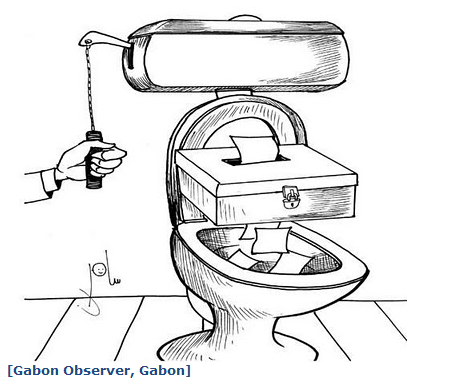
Is ‘universal suffrage’ as it is practiced today a sham? For France’s Le Monde, philosopher Jean Salem asserts that the popular vote, rather than being a kind of panacea for rule by the people, gives the dynastic transfer of power a patina of legitimacy in the world’s old and new democracies.
For Le Monde, philosopher at the University of Paris I-Panthéon-Sorbonne Jean Salem starts out this way:
When considering our faltering civilization, I think it beneficial to paint a broad picture of the electoral circus; the confiscation of power that this circus allows right before our very eyes; and the regime of uninterrupted elections that renders life for citizens of democracies so exhausting.
The electoral circus hinges on the implausibility of public speeches made by notable figures, and the appalling disconnection between themselves and high culture. It is a race to completely wipe out any historical memory, in which the actors play second-rate “paper games” to try and pretend that they really detest one another. But most of all, it is the utterly mind-blowing result of what follows from what philosopher Alexis de Tocqueville called “universal suffrage.”
For it is through the conduit of the popular vote, and not necessarily as a result of vote fixing, that transfers of power have increasingly tended toward political dynasties, such as the Bhutto family in Pakistan, the Ghandhis in India, father and son of the Bush family in the United States; the Bongos [in Gabon], the Kabilas [of the Congo], or the Eyadémas [in Togo]. And what of the Karamanlis and the Papandréous, where we are no longer talking about a single generation of sons, but of grandsons (the hereditary Greek democracy was embodied by five members of these two families for 37 out of the last 50 years!).
READ ON IN ENGLISH OR FRENCH AT WORLDMEETS.US, your most trusted translator and aggregator of foreign news and views about our nation.