
















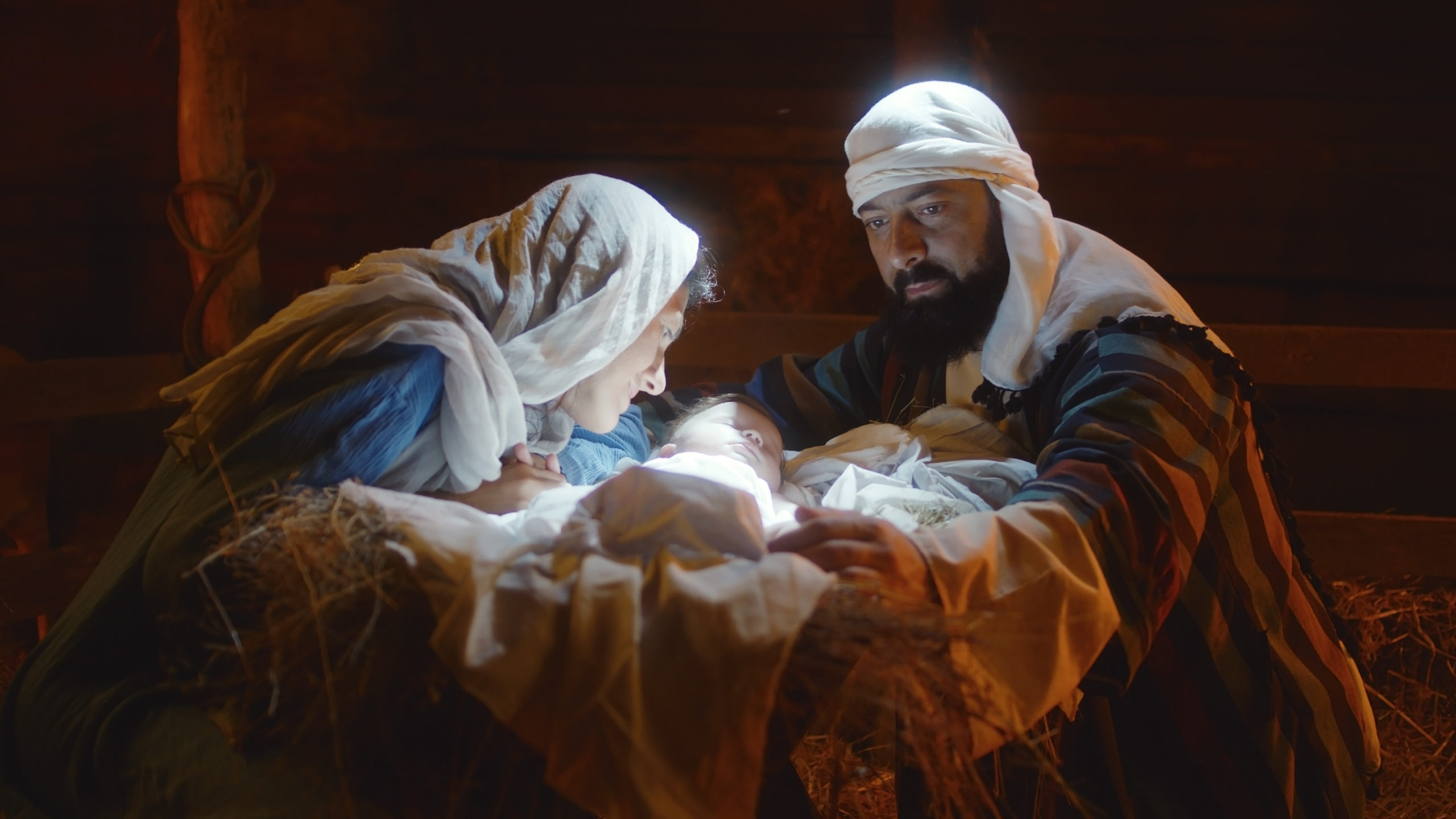
What would the U.S. be like if Christian churches depicted the ethnicity of Jesus of Nazareth as the Middle Eastern Jew he must have been rather than as a White European?
In 1970s America, 90% of us identified as Christian. We weren’t a “Christian nation” but we were a Christian society, in terms of religion.
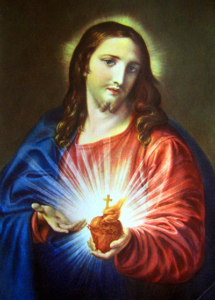
I grew up in the deep south, and when I think of Jesus, I see in my mind’s eye a man with light brown hair, light skin, a beard and blue eyes. A man, perhaps, not unlike the painting of the Sacred Heart of Jesus by 18thcentury Italian artist Pompeo Batoni.
Or I may be remembering pictures like the Head of Christ, painted in America in 1940 and reproduced at least 500 million times. According to University of South Carolina scholar Anna Swartwood House, Sallman Head’s “painting culminates a long tradition of [W]hite Europeans creating and disseminating pictures of Christ made in their own image.”
It makes sense that American Jesus looks like a European because Western Europeans colonized North America. They brought White “European Jesus” with them.
But he is not authentic, because authentic would be “different.”
To be clear, I am not a religious adult. I’m one of the 1-in-3 Americans today who are unaffiliated. Yet I found myself thinking about religious iconography after hearing President Donald Trump rant about Minnesota Somalians and call those naturalized citizens “garbage.”
Why reject a community well-integrated into its surroundings simply because they don’t look like you, Mr. President? And then, not for the first time, I silently railed against faux Christians who treat empathy like a bad word.
How might our society change if our image of Christ were more authentic? Would we be more accepting of “the other” — like those Somalians — if our deity did not look like us?
Images of a darker-skinned Jesus in traditionally White Christian churches would probably initially be unsettling. After all, darker-skinned Americans (from Blacks and Asians to Native Americans and Arabs) are a minority here. What assumptions would we need to address so our iconography could reflect an authentic Jesus Christ?
Wisconsin Evangelical Lutheran Pastor Niveen Sarras reminds us of his heritage:
The New Testament doesn’t tell us what Jesus Christ looked like. Instead, it emphasizes his identity as a Jew and a descendant of David. His parents were Jews; he was born in Bethlehem and grew up in Nazareth.
At the time of his birth, Romans were newcomers to the area, a crossroads between Europe and Asia. The natives had dark hair, dark eyes and olive skin. Romans were, well, Roman, and we have statues that suggest their appearance. Later, Europeans bought the Crusades to the region. Still later, European painters ensured that, for them, “White Jesus [became] a norm of truth.”
But it’s not authentic. And accurate representation matters. Without a doubt, the image we see colors the thinking of parishioners, specifically, and society, in general.
This lack of authenticity is not the cause of unwelcoming attitudes but I believe it contributes. Before acceptance must come realization.
As the latest Trump rant reveals, hatred of anyone – citizen or not — who does not look like a White European is driving public policy. People whose skin is darker; whose hair is darker. Whose face or eye shape might be different. Whose speech carries a different accent, perhaps.
There are some counter measures, such as the Catholic Church in Massachusetts that replaced the baby Jesus in their nativity scene with a sign, “ICE Was Here.”
The Rev. Stephen Josoma is brave: he’s made political statements with that nativity scene in the past. He challenges conventional thought and wants “to help people recognize the plight of people who are really in dire need.” Who are different.
What if that church, and others, added some iconography that is similar to the man pictured atop? It would help us remember that Jesus Christ was not White but, instead, was “different.” That most of the people of the world are also “different.” That there is no one majority race, however defined.
Would seeing a more authentic image of Jesus better help us remember the words of the New Testament, teachings that were at odds with the authorities of the day? Turn the other cheek; love your enemies; show mercy to those in need; if you have two shirts, share one with someone who has none. In a word, empathy.
We are on the cusp of the holiday season for many of the world’s religions with Christmas, December 25, holding reverence for Christians as the birth of Christ. How would you ensure that White Christians also remember that he did not look like White Europeans? That he was … different.
~~~
This first appeared at Memo from a News Hound on Substack.

Known for gnawing at complex questions like a terrier with a bone. Digital evangelist, writer, teacher. Transplanted Southerner; teach newbies to ride motorcycles. @kegill (Twitter and Mastodon.social); wiredpen.com