







An Internet hub for moderates, centrists, and independents, with domestic and international news, analysis, original reporting, and popular features from the left, center, and right

A Quick Question on Card Check

It seems that the “Employee Free Choice Act” or Card Check will head to the floor for a vote in both chambers this week. Support in the Senate, however, seems to be wavering.

At least six Senators who have voted to move forward with the so-called card-check proposal, including one Republican, now say they are opposed or not sure — an indication that Senate Democratic leaders are short of the 60 votes they need for approval.

You can find plenty of coverage of this issue all over the web (reference Memeorandum for a roundup) but I have one basic question on the issue to put to the readers. I’ve watched the war of television ads on the subject, and the pro Card Check spots all seem to be defending it on the basis of saying that EFCA won’t “take away” the employees’ right to a secret ballot, but will rather “put the choice in the hands of the employees.”

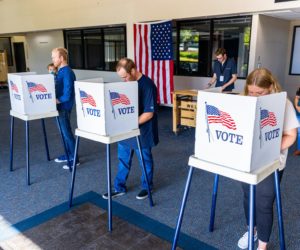
So here’s my question: Why is it even an “option” in any case? The reason for secret ballots, much as in government elections, seems obvious. Some people don’t want their votes known for fear of potential retaliation if they feel they might be coming out on the losing side of a contentious issue. What do the winners lose if they participate in a secret ballot? They still get to vote, just as they would in some open, “card check” type scenario. Nobody has their rights denied in a secret ballot, but that can’t really be said under the other system.

What is the point of this beyond greasing the skids for unionization, even if some of the employees object? Can anyone explain what exactly is so dangerous about a secret ballot?

  • Uncular1
    As a lefty I'm not sure. Not a fan of EFCA because I feel it weakens the legitimacy of unions and furthers the perception that they are corrupt entities. People already have a generally unfavorable attitude towards unions I don't know why they want this PR mistake. Oh yeah, greed (maybe). I'm willing to listen to pro reasons, however.
  • DaGoat
    I think it's very tough to make the case that openly signing a card is superior to a secret ballot. And if the unions weren't a loyal Democratic Party special interest group nobody would even be taking this seriously.
  • Here's what Wikipedia says (take with a grain of salt):
    However, there is a difference between the two methods. Under current U.S. law, the employer need not recognize the express wishes of its workers through a majority sign-up card check petition and can require a secret-ballot vote overseen by the NLRB. Thus, an employer may refuse to bargain with or even acknowledge a union chosen by most of its workers through majority sign-up.

    Under the proposed Employee Free Choice Act, workers would be guaranteed the right for the union they choose to be recognized, whether they choose it through majority sign-up (card-check) or an election process. The choice of whether and how to organize into a union would thus belong to the workers themselves instead of to companies. Introduced originally in the U.S. Congress in 2005 and again in 2007 and 2009, the Employee Free Choice Act provides that the NLRB would recognize the union's role as the official bargaining representative if a majority of employees have authorized that representation via majority sign-up (card check), without requiring a secret ballot election.[4] [5] The Employee Free Choice Act allows employees to choose a secret ballot process to elect union representation if they do not desire a card-check petition, but employers are required to accept whichever method employees choose.

    http://en.wikipedia.org/wiki/Card_check#Current...

    It sounds like the idea is to force employers to recognize the validity of the union through either process. Makes sense to me, if the workers want to be open about the process they should have the backing of the law.
  • ghokbuti
    The answer to your question is that the problem with the current system is not the secret ballot per se, but the fact that under the present system there is a delay between the beginning of the process (which is begun with at least 30% of employees signing on in favor of unionization) and the holding of the election, during which time the employer typically engages in a variety of illegal activities designed to pressure employees into voting no.

    Card check does away with this problem by allowing employees to unionize without an election, but there is more than one way to solve the problem. For example, you could create stiffer penalties for illegal labor practices, or you could eliminate the delay between sign-up and election. These issues are addressed at length, and well, in T.A. Frank's recent article in the Washington Monthly, The Little Unions That Couldn't, at http://www.washingtonmonthly.com/features/2009/...

    As for the issue of unions pressuring employees to unionize through card check, I guess the question is, who do you think is more likely to abuse the system as it is currently configured, the unions or Wal-Mart? Personally, I'm guessing that the unions, and not Wal-Mart, are more likely to have the employees' best interests in mind. As Frank notes, "workplace votes on unionization certainly don’t resemble a healthy election as most Americans would understand the term."

    In any event, I see no reason why there should not be severe penalties for illegal practices by the unions, just like there should be for the employers.
  • upyernoz
    just to echo what ghokbuti says. the problem isn't the secret ballot per se, it the practical problem that conducting a secret ballot election takes time. what has happened under the current system is that during the monthlong "campaign period" preceding a union election, the employer finds a pretext for firing all of the outspoken union supporters thus intimidating everyone else into voting against the union.

    while those terminations are technically illegal, the penalties for doing it are really weak, proving motive in any termination case is difficult, and those cases take years to adjudicate. even if the terminations are ruled to be illegal, by that time the unionization campaign is long over, and the amount the employer is likely to pay in penalties is likely to be a lot less than it would cost them to have a unionized work force. that's why anti-union consultants advise their clients to break the law and fire people for speaking in favor of the union. in a cost-benefit analysis, the current law encourages lawbreaking behavior.

    the benefit of card check is that employees can fill out the cards before the employer is aware of the unionization campaign. in a sense, it's a different kind of secret ballot. it's just this time the secret is being kept from the employer.
  • AustinRoth
    All one needs to do to know Card Check is horribly bad idea that will subsequently be used to bully, harass and intimidate opponents, is to reflect on what happened in California with Prop 8 just around the availability of information on donations.

    Now imagine that categorical proof is available on actual votes in union elections (which are already rife with intimidation, collusion and violence at times, from both sides).
  • jstephenson
    I have never understood Democrats. If they pass this law, they pretty much will end up killing all manufacturing in this country.

    Is this what they want? I mean, why the hell would anyone stay in business here in America once this passes. Move the company to Mexico and pay even cheaper wages.

    This is just stupid. We live in a global market people. As such, if the wages paid to people, or the benefits become to expensive, IE, the Steel industry, the auto industry. Guess what, you lose market share. Which makes it that much harder to compete or provide those benefits.

    Also, i know they want to go after Wal-mart with their 4% profit margin. Just means the poor people will have to pay the extra tax. But then that is what always happens when the government interferes in the market place.
  • PapayaSF
    in a sense, it's a different kind of secret ballot. it's just this time the secret is being kept from the employer.

    And not kept secret from union organizers, who are never known to use intimidation or violence to get their way, right?

    Face it, EFCA supporters: A "secret ballot" that's not secret to one side isn't "secret" at all. This is a huge, anti-democratic power-grab by unions, not a solution to a supposed problem that has many other less-drastic solutions, as other have pointed out.
  • jstephenson,
    You shouldn't be so quick to engage in a race to the bottom. Simply put, our workers can't compete on a wage or benefit basis with Chinese workers, or workers in the 3rd world. It costs too much to live in the United States versus in those countries.

    So what's the answer? I'm not so sure we can keep enough good jobs in this country while embracing globalization. Perhaps it's time to start engaging in protectionism before we're all working in health care or service jobs.
  • upyernoz
    And not kept secret from union organizers, who are never known to use intimidation or violence to get their way, right?

    except that kind of intimidation is already illegal. and unlike the toothless penalties for the employer's illegal discharges, the penalties against unions are quite severe: RICO charges, trusteeship, removal of the union officers, etc.

    if your point is that both the union and employer have the power to initimidate employees, of course you are right. the difference is under the current system it is extremely easy for the employer to get away with it whereas it is very difficult for the union to without suffering harsh consequences.

    if instead of a card check you're proposing making the discharge of union supporters a criminal offense, subjective the company to large fines and jail time (like under RICO) and require that the CEO and board of directors of any company that fires someone for their union activity be removed from office, that would seem like a fair substitute to me.
  • casualobserver
    Let's be bipartisan and grant the Dems their wish.........then the $79/hour assembly labor cost that turned Detroit into a ghost town can now be used to convert the $45/hour assembly plants in Tennessee and Alabama back into farmland. But that is cool because all the unemployed can starve in a more ecologically pure environment.
  • casualobserver,
    Funny you use the obviously false $79/hour claim to make your snarky argument.
  • upyernoz
    i think it's funny that opponents of the EFCA keep talking about manufacturing. that's not really where unions are going with the card check legislation. it's more about service sector jobs. those are the jobs that can't be moved overseas.

    manufacturing still exists in this country, don't get me wrong. but in the context of the larger economy, it's not where most of the union-organizing action is.
  • DaGoat
    unlike the toothless penalties for the employer's illegal discharges, the penalties against unions are quite severe: RICO charges, trusteeship, removal of the union officers, etc.

    It seems to me a better approach would be stronger penalties against companies for illegal tactics if that is the root of the problem.
  • casualobserver
    Chris,

    I'm surprised you are advocating curtailing the pension benefit payouts, but OK, when you do, I will revise my numbers.
  • casualobserver,
    Find me the average Detroit auto worker making $130,000+ a year. I'll wait.
  • PapayaSF
    Sure union intimidation is illegal, but how many employees are going to risk their jobs (and their car's tires, etc.) to report illegal intimidation by a union organizer or coworker to the police? Darn few, I'll bet. It's ridiculous to destroy the secret ballot and create a system that is a clear invitation to abuse, just to make union organizing "easier."
  • Mu111
    I was very pro-union, until I saw the US implementation of the idea. Giving the "local" the power to "persuade" a workforce in secret is an open invitation for corruption. Yes, there is the potential for abuse by the management, but at least there are courts to deal with it and, probably since WWII, management has stopped sending the bullies after you telling you what advatages unionization has for you (no broken bones for starters).
  • GregQ
    Sure: what's "wrong" with a secret ballot is that, when employees get a chance to vote without the threat of union intimidation, they don't vote the way the union thugs want.

    Since the only "freedom" liberals believe in is the "freedom" to do things liberals approve of, liberals are supporting card check so that union thugs will have the freedom to bully people into paying union dues, and workers won't have the freedom to vote "no" without risk of their tires being slached, their windows broken, etc.
  • You guys rock. Lots of good stuff to think about.
  • AustinRoth
    Hey Chris -

    So, if we agree that there are those confusing the concept of 'labor costs' with 'wages', how about the fact that the non-union shops are paying more than the union ones, and not only in the auto industry but many others? And that si before you take into consideration the union dues that are taken out of the checks of union employees.

    The harsh reality is that, as a whole, the U.S. unions do not exist to better the conditions of the union workers. They exist to fund themselves and amass political power.

    Have you ever seen the salaries and perks of the heads of the big unions? They have learned a lot apparently from years of sitting across the table from Big Business executives!
  • AR,
    I'll have to see that data about non-union shops versus union shops. I'm willing to concede that unions aren't a panacea, but I still think that overall they provide a necessary counterweight to the power of super wealthy employers. Things would be different if so many people didn't rely on the Wal-Marts, McDonalds and GMs of the world for their jobs.

    Of course unions are going to try to amass power for themselves, that's what businesses do as well. But unions need people in the unions to have the kind of power you're talking about. If unions didn't provide some kind of benefit, people would never join them, or risk their jobs trying to.
blog comments powered by Disqus
© 2005-2009 The Moderate Voice | Site design by Elegant Themes | Site customization, hosting, and security by Enxit Group, LLC