













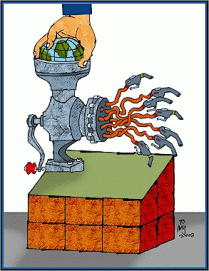
Heightened international competition for the planet’s scarce resources has begun, and it’s emerging nations that stand to lose the most, warns O Globo of Brazil’s chief international columnist, William Waack.
“The first is contained in a report from the respected International Energy Agency , which assumes that geological and geopolitical reasons will inevitably lead to an oil supply crisis. … The other interpretation follows the same scenerio (price inflation, competition for scarce resources) but arrives at a far different conclusion. The rising cost of a barrel of oil will lead to a slowdown in the global economy, which will prevent the emergence of a crisis in supply.”
“The emerging nations will have to compete, perhaps for the first time, for the same resources available to the already rich and developed.”
By William Waack
Translated By Brandi Miller
May 23, 2008
Brazil – O Globo – Original Article (Portuguese)
The immediate consequence of the explosion in oil prices is clear and irreversible in the short term. It’s the global inflation that has manifested itself in higher prices for food, airfares, freight costs, consumables and finished products in many sectors.
But for the medium term, there are two conflicting interpretations. The first is contained in a report from the respected International Energy Agency , which assumes that geological and geopolitical reasons will inevitably lead to an oil supply crisis. This interpretation was the immediate cause of nervousness on oil markets this Thursday (May 22).
The other interpretation for the medium-term follows the same scenerio (price inflation, competition for scarce resources) but arrives at a far different conclusion. The rising cost of a barrel of oil will lead to a slowdown in the global economy, which will prevent the emergence of a crisis in supply.
It’s difficult to resolve this “battle” of interpretations at the moment. Other similar episodes of rising oil prices show that higher prices spur new technologies and the better use of fuel. In the decade of the seventies, the “shocks” in price and supply (caused by geopolitical, not geological reasons) were absorbed by a fantastic technological revolution – the information age.
READ ON AT WORLDMEETS.US, along with continuing translated foreign press coverage of the United States and the global energy and food crisis.