














An Internet hub for moderates, centrists, and independents, with domestic and international news, analysis, original reporting, and popular features from the left, center, and right

Why a Big CCC Won’t Work Today – But a little one might help

The U.S. is facing massive structural unemployment – possibly for years to come. We can use a few but not all the ideas from the past because the world, and our nation’s private sector and Federal government, are significantly different from the 1930’s.

THE DISMAL NUMBERS

The past decade was remarkable for its miserable job growth and generally stagnant wages, even though the total U.S. population increased by over 20 million. Total 2009 workforce numbers for the private-sector economy and for all levels of government service are almost the same as they were in 1999. We can’t afford to have another stagnant decade that could be worse than the last. We are starting this new decade with high unemployment, mounting personal and business bankruptcies, massive residential and commercial real estate turmoil with steadily growing foreclosures, our public finances at the Federal and State levels completely unbalanced, and strong global competition from nations with far fewer domestic problems.

We have a steadily rising official unemployment rate of 10.2% and the unofficial under-employment and unemployment rate is at least 18%. We have more than 25 million people out of work, working reduced hours, part-time, as temporary independent contractors, or they have involuntarily gone back to school or are now staying at home taking care of kids and endlessly cruising job boards. This period of large unemployment resembles the 1930’s in sheer numbers but the origins are rather different. It has hit those over 45 particularly hard even though they have many skills and job experience. Simultaneously it has decimated the job prospects of many between 18 and 30 who might have college educations but limited prior job experience.

If arguably the March 2009 Stimulus Package has saved or created about 1.5 million jobs, at best it might save or create around 3 million more by the time it runs out of authorized funds at the end of 2011. Taking those numbers positively, they are still woefully inadequate in light of the need, and viewed suspiciously, they are almost irrelevant.

Much of the Stimulus money went to the States to cover massive budget shortfalls, so that is where we likely can find the “saved” jobs calculations. Another large chunk of Stimulus money went for income preservation in extending middle-class tax cuts, unemployment benefits, food stamps and Medicaid coverage. Infrastructure spending is just coming on line and will continue through 2011 but we can endlessly debate “shovel-ready” projects and our long-term infrastructure needs that have yet to be fully addressed.

This country needs to create at least 100,000 new jobs a month just to keep up with population growth. Economists in government, academia and the private sector anticipate we will be shedding more jobs for the next year or two. Massive government programs won’t solve this huge dilemma but several targeted public-private partnerships might hold more promise.

HISTORY OF THE CCC

There is a growing chorus calling for large-scale direct Federal programs for job creation, such as bringing back the Civilian Conservation Corp (CCC). Unfortunately they won’t work as they did back in the 1930’s because our entire economy has changed drastically since then. However, a small, targeted forestry and land management internship program could be a worthwhile part of a much larger effort that works directly with the private sector to create more jobs for the future.

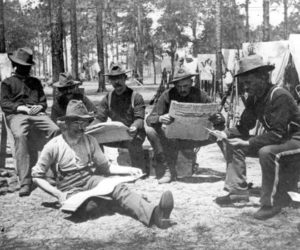
PBS stations recently broadcast a very informative documentary about the original CCC. This was a national effort to employ millions of men in every state, principally working in public parks, forests, federal protected areas, wetlands, and other rural areas planting trees, building paths, dams, and accommodations in National Parks, and performing other related conservation and environmental activities. The pay was very low (about $25 a week per person) and the living conditions were minimalist as they were housed in Military-style barracks and tents. The U.S. was so desperately poor in the 1930’s that millions of young men flocked to this program. It was disbanded in 1942 at the start of World War II.

The PBS documentary showed battalions of universally thinner men than today working happily outdoors with shovels, pitchforks, wheelbarrows, and some modest mechanized construction equipment. They built thousands of small bridges, dams, new hiking trains, camp shelters, and new tourist lodges with stone, wood and other natural materials in our Nation’s parks and forests. The work was labor intensive and those who worked for the CCC had very limited educations or job skills. The CCC also provided literacy classes and basic job training during the evenings.

The men of the CCC were generally single, young and childless – and did I mention much thinner? If they had children, they were cared for by a stay-at-home spouse while they were shipped to far-off camps on a vast national network of inexpensive passenger trains that no longer exists. CCC men sent most of their earnings back to parents so they could survive before the days of unemployment benefits, food stamps and Medicare.

The men of the CCC were being prepared for the private sector jobs available at that time. They had to develop physically and mentally to do work in heavy manufacturing, construction and warehousing. The CCC was also a perfect training ground for the Military that eventually swallowed up most of them in 1942 for the War Effort. When they returned from the War, the 1950’s and 60‘s offered plenty of manufacturing, construction and warehousing jobs, plus the GI Bill to go to college to qualify for emerging jobs in the sciences and technology, and for new management positions.

CHANGED AMERICA

Why won’t a huge CCC work today? We can all acknowledge that our national parks and federal forests, plus many other state-owned and local city parks have been neglected for many years. We need to make some serious financial commitments to them but they won’t need millions of people digging with shovels to fix them. The most labor-intensive activity is the hand-planting of tree seedlings – which is not even the largest priority in our national park system today. In addition, our Federal and State Governments are much larger today so it takes much longer to get things organized with expansive bureaucracies.

Over the past 2 decades, our economy shifted the majority of our manufacturing facilities and labor-intensive work overseas to low-wage and low-cost countries, or to the dustbin of history through mechanization, computerization, and the use of robots. We will not need millions of young men to liberate half the world in a massive Military endeavor. Our country is financially strapped to maintain even its current military size, foreign bases, and large combat operations in Iraq and Afghanistan. Many of today’s job openings are in healthcare, renewable energy, basic accounting, computer network administration, public education, and other positions that deal with people and are located in offices.

It is rather unlikely we can get a large number of unemployed people to move to the wilderness or to live in camps outside our cities – unless things get far worse in our economy. We would likely have to house them in local motels at 2 to a room rather than building portable military-style camps. Much of the physical work performed during the 1930’s has long since been mechanized. Heavy physical labor and daily exercise might be good for many obese Americans but realistically speaking, there are few manufacturing or construction jobs left or in the future with the private sector. Many of today’s younger unemployed have families and they are often the sole parent or provider – so what are we going to do with their children?

TARGETED INTERNSHIPS IN FORESTRY AND LAND MANAGEMENT

A new Targeted Internship Program (TIP) could help from 1 to 2 million people develop new skills in forestry, land management, energy conservation, urban parks, and general environmental planning. However the program should be designed for the total number of private sector and government jobs that will be needed in these areas over the next decade.

The Federal Government, contracting through several regional private-sector management and job placement companies, would directly finance the employment of between 1 and 2 million people who enjoy working outdoors, who are interested in various land management issues, and who want to use the program as a low-paid internship. Many interns might not be assigned to work outdoors in National Parks but rather they would be placed in various Federal and State bureaucracies or with private sector companies for 1 or 2 years until the could be permanently employed outside the program.

If the interns are paid the same as Army Privates (around $17,000 a year) the total program would likely run about $40 to $80 billion over a 2 to 4 year period. It would take about 6 months to ramp up this multi-faceted program provided the private sector were given the principal task of actually allocating interns to governmental entities and private sector employers.

OTHER IDEAS FOR JOB CREATION

Unfortunately this TIP in forestry and land management would help less than 10% of the total unemployed in the U.S. so we must promptly pursue other job-creation ideas to fully address our larger national needs. Our efforts should focus on small business creation and its expansion as this sector has been, is, and will be the bedrock of the U.S. free enterprise system.

This post is not designed to denigrate all types of direct governmental job creation, or public sector employment. But most governmental spending, and the type that has the largest multiplier effect on the entire economy, is through contracts with private sector companies that actually perform the assigned tasks and build the needed infrastructure.

Many of those longer-term infrastructure projects are certainly worth supporting. However they are separate from the urgent need to restart our nation’s stagnant private sector economy, overall consumer confidence, and promptly reduce systemic unemployment in the U.S. Unfortunately, our dysfunctional financial and banking sector will not be of much help to the rest of the economy for many years to come.

Smaller private enterprises are far more capable of quickly responding to public stimulus money than are large corporations and governmental bureaucracies. Jobs will be created as the private sector expands but only if we creatively and forcefully target small business expansion. These other proposals will be addressed in my next TMV post.

Marc Pascal

  • Good points Marc. However, there is plenty of infrastructure work to be done, and many ways to go about it. The Army Corps of Engineers could be authorized to hire civilians to build and repair levees and other flood control; energy retrofits, which require a dazzling array of high tech skills and semi-skilled labor; Habitat for Humanity style building projects for the homeless, including homeless veterans. There's no reason at all why "conservation corps" jobs can't be fully urban. We need a sizable army with caulk guns just to seal window and door frames. Another army to blow in insulation and install solar panels. And it's not make-work either. It's all essential, and we'll be way better off when the economy finally recovers and we need less energy to thrive.
  • Father_Time
    How about older people teaching the benefit of their skills and experiance to those that need retraining?
  • superdestroyer
    Of course, the left refuses to look at the idea of deporting the 10-20 million illegal aliens. Why start up a jobs program while maintaining open borders and a policy of unlimited immigration.

    Also, idea like Corps of Engineers require environmental assessment, contract bidding, and the proper number of minority contractors. They take years to get started.
  • Don Quijote
    Of course, the left refuses to look at the idea of deporting the 10-20 million illegal aliens. Why start up a jobs program while maintaining open borders and a policy of unlimited immigration.

    What do you say to the idea that we start penalizing employer who hire illegal aliens, lets say 100k per violation for the first 100 violations , and 500k for every violation above 100.
    It will be fun to listen to the business community, good republicans one and all scream bloody murder, and to listen to them explain to us that Uncle Sam is taking the bread right out of their mouths.
    Also, idea like Corps of Engineers require environmental assessment, contract bidding, and the proper number of minority contractors. They take years to get started.


    Well we could always KBR a nice cost plus contract to manage the job. I am sure that they would not rip us off.
  • Nice post Marc. Certainly something along the lines of a CCC or WPA was what I was hoping for when The Stimulus first came under discussion -- what a shame.

    Yes, we are very much a changed America, and technology has impacted our ability to employ many people at a low level of technical sophistication is radically reduced. (Technology -- ain't it great?) However, many of the CCC projects stand today. They were engineered and executed wonderfully, and I happily encounter them in my hikings and wanderings all the time. National parks, though, aren't the only places such projects would be useful. State parks, township conservation properties -- all across the country, there are millions and millions of acres that need intelligent stewardship.

    That said, though, I agree with GreenDreams. Among the many changes has been the urbanization of this country, and a radically different energy outlook. Putting people to work in the urban areas strikes me as an exceedingly useful idea. The needs there are vast, and the long-term benefits enormous.

    And the roads / bridges / sewage systems all across the country are badly in need of repair and updating.

    I would be willing to put public funds to use in this way, and support it strongly. Heck, I'd probably even volunteer to get involved out there in one of my beloved parks.
  • dduck12
    That was a great program on the CCC. At least a smaller program should be considered. Very important though that the current environment is for big and bigger. Small gems get lost.. There are so many toes not to step on such as unions, existing businesses, prisoner work programs, etc. But, hell if you don't try you will never know. Also, I don't know how you could get truly positively motivated participants. That could be the biggest hurdle. LOL
  • DaGoat
    I think this is one of those ideas that sounds great in theory but in practice will be difficult. Worker expectations and protections are very different today as compared to the 1930's. There will be demands these workers be paid at union scale and benefits, and working conditions will have to be adequate to meet OSHA standards.

    In addition, many of the kind of projects being talked about require skilled laborers, not unskilled. You can't just hire some schlub to repair a bridge, you need ironworkers, welders, etc. By the time the unskilled are trained the job situation would probably have improved on it's own.

    Finally, I have to question the level of interest in a CCC type project given that many people are already receiving unemployment and will see no personal benefit in joining such a program.

    I do like the idea of improving infrastructure but it would be quicker just to hire out the projects using existing skilled laborers that are currently unemployed (as opposed to creating a government program).
  • ProfElwood
    It sounds better than the pork-barrel stuff we're doing today. Heck, toss in the able-bodied who are on extended unemployment. It would be far better to pay people to work that to pay them to not work.
  • "Of course, the left refuses to look at the idea of deporting the 10-20 million illegal aliens."

    Neither does the right, because it's a stupid and undoable idea. Mister naysayer, there are thousands of "shovel ready" projects in every single state. And both minority and female contractors have already been qualified, as have contractors with no such designation (which do still get the lion's share of the work).
  • "I think this is one of those ideas that sounds great in theory but in practice will be difficult. Worker expectations and protections are very different today as compared to the 1930's. There will be demands these workers be paid at union scale and benefits, and working conditions will have to be adequate to meet OSHA standards."

    Why should we want anything less than safe working conditions. This is a new low for you DaGoat, supporting cost cutting through sacrificing worker safety. And you're wrong about worker expectations. Very wrong. Home building, construction and remodeling industries are in freefall right now. There has never been a faster collapse of any industry I know of. Believe me or not, but there are vast pools of experienced construction workers, planners, designers and installers who are out of work and desperate.
  • Jim_Satterfield
    I agree with GreenDreams and Polimom. Lots of experienced construction workers are currently unemployed and if we started projects retrofitting older homes and commercial buildings to be more energy efficient it would be a double win for our economy. Our infrastructure needs are also tremendous and are being neglected to the point to where enough workers in those fields are out of work to positively impact our country by putting them to work. Then there is the multiplier effect as these newly re-employed people have money to spend.
  • DaGoat
    This is a new low for you DaGoat, supporting cost cutting through sacrificing worker safety.

    I think you're losing it, GD. I'm not supporting cutting costs by sacrificing worker safety. I'm saying the standard of worker safety has changed since the 1930's, and that will make things more complicated as compared to that era.

    And I am all for hiring currently unemployed construction workers, I just don't think we need a CCC to accomplish that. I would have preferred an increased focus on infrastructure in the stimulus bill.
  • DLS
    "a dazzling array of high tech skills and semi-skilled labor"

    Including prison labor. This should not be neglected, or worse, ignored or avoided.

    No union subjection, "prevailing wage" union-favoritism, etc. No make-work just for make-work's sake, no emotional drivel recalling the WPA and trying to cast Obama again ridiculously as another FDR. [gag]

    Infrastructure, yes. (New highways, deficient bridge repair and replacement, electrical transmission new construction as well as upgrades, such as uprating voltages and replacing older towers with newer, more enviro-friendly and aesthetic cost-effective towers, etc.) Retrofitting structures for energy efficiency (new insulation, substandard facility repairs and replacements, LEAD PAINT REMOVAL in places like St. Louis city buildings, etc.), yes. Just don't overdo it or leap emotionally to ridiculously silly expectations.
  • DLS
    "Among the many changes has been the urbanization of this country"

    Actually, the reality is the suburbanization and exurbanization of this country.

    Inner-ring suburbs and the next, currently-declining adjacent communities are the best bang for the buck.

    (What I omitted from an earlier posting is something not related to nuts and bolts only, but which is the next step, which would be to rebuild housing as well as roads and bridges, etc., and then to address not only public housing, but to look ahead to long-term housing as well as rehab for the unemployed and those getting out of jail or prison, etc., who are being job-trained, ideally -- where will they go? What about disaster refugees, if rebuilding their former home makes no sense for various reasons, be it too costly, too outmoded -- central-city oriented -- or in an environmentally unrealistic or risky place like beach areas near hurricane storm surge zones, for example? What about so many inner-city people whose future jobs are in the suburbs and smaller cities in rural areas, etc? Relocate them into homes that are set up for them. It's cheaper, anyway, than perpetuating the existing inner-city treadmill to nowhere.)
  • DLS
    "I would have preferred an increased focus on infrastructure in the stimulus bill."

    So would I. Any government stimulus (especially with the federal government) is normally rejected, but many of us were willing to suspend propriety and give Washington (ObamaCo) the chance to try what in theory was grand and appealing and logical, if not economically and ideologically controversial.

    This thread, the "economic summit" next month by ObamaCo, and all other discussion and nearly all other thought on subjects related to this right now are news and discussion issues specifically because ObamaCo and the lib Dems in Congress did the wrong this so far, this year, and have achieved next to nothing in addition to engaging in a great deal of wrongdoing and present and future harm. It's no surprise now that trying to do things right, after all, this time, hopefully (which is what this thread and these issues really are all about, doing things right, after all, this time, hopefully) is developing news now.
  • DLS
    Time for some well-earned justice:

    "deporting the 10-20 million illegal aliens. Why start up a jobs program while maintaining open borders and a policy of unlimited immigration"

    Make 'em build a wall before they're kicked out first!
  • DLS
    "it would be quicker just to hire out the projects using existing skilled laborers"

    Subcontracting in fact makes sense as a permenant way to down-size government operations.

    This was conceded in the 1990s, even though it was fought by government unions (which we still see in ancient places like Detroit city, currently) and even though contractor problems in Iraq have blemished it.

    There's no reason that we can't subcontract most of this, as well as, for example, hire prison laborers. (So much nonsense is being said about the chain gangs, which are more humane now than before, and none of the silly critics bother to ask the prisoners what they think about getting the chance to do outside prison and jail walls. Never mind that an expanded scenario as on this thread would involve job experience or training, effectively, too.)
  • "Subcontracting in fact makes sense as a permenant way to down-size government operations."

    Uh huh. Like $900 a day mercenaries instead of trusting our troops? Like hiring Halliburton at $200 an hour to subcontract operations to another company at $75 an hour so they could subcontract that to another who actually hired someone to do the work for $7.50 an hour. Yeah, and to think you're the one whining about deficits and debt.
  • JeffersonDavis
    I agree wholeheartedly, Poli....

    I think all of us had some civilian work (infrastructure or otherwise) ideas in our heads when the word "stimulus" came up for the first few times. Then it all went to banks and insurance companies. Indeed.... What a shame.

    Infrastructure is the way to go. That was one of the things I liked about Huckabee.... This was his exact approach to helping the economy in a downswing. I really liked that guy.
  • superdestroyer
    The KBR Logcap contract in Iraq is an IDIQ contract. If you do not understand that sentence, then you really do not know what you are talking about. Besides, KBR cannot get around NEPA (Iook it up) than any other compony in the U.S.

    Besides, nimbyism from progressives like yourself will ensure that most projects cannot get started in the U.S.
  • DLS
    As I wrote:

    Subcontracting in fact makes sense as a permenant way to down-size government operations.

    "Uh huh. Like $900 a day mercenaries instead of trusting our troops? Like hiring Halliburton ..."

    This was conceded in the 1990s, even though it was fought by government unions (which we still see in ancient places like Detroit city, currently) and

    [Read the following, which was missed earlier.]

    even though contractor problems in Iraq have blemished it.
blog comments powered by Disqus
© 2005-2009 The Moderate Voice | Site design by Elegant Themes | Site customization, hosting, and security by Enxit Group, LLC