







While many Americans were accused of not supporting our troops, of being unpatriotic, and worse, for criticizing our involvement in Iraq and the way that war was being managed, I will not accuse Conservative George Will of anything.
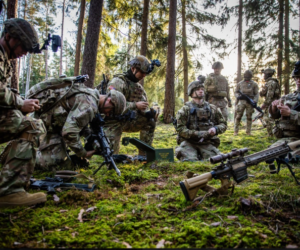
In ‘Why are we still in Afghanistan?”, (replace “Afghanistan with “Iraq” and see how familiar that sounds), George Will is having second thoughts about America’s nearly eight-year involvement in Afghanistan (“The war already is nearly 50 percent longer than the combined U.S. involvements in two world wars…”); about our strategy there (protecting the population; “clear, hold and build”); about the troop surge–another familiar word (U.S. forces are being increased by 21,000 to 68,000,); and about how the war is being fought.
On the latter, Will suggests a “comprehensively revised policy,” one that includes a substantial reduction of forces and one where “America should do only what can be done from offshore, using intelligence, drones, cruise missiles, airstrikes and small, potent special forces units, concentrating on the porous 1,500-mile border with Pakistan, a nation that actually matters.”
Again, I will not criticize Will. First, because I believe he is a patriot. Second, because I am no expert and have no way of knowing whether his recommendations will “work,” or not. And, third, because—although I do believe that we had a legitimate reason for our involvement in Afghanistan, unlike Iraq—I realize how tough this war is, and how difficult it will be to “win” this war in a strictly military sense.
What do I mean by difficult to win it militarily?
For that, let me first refer you to a comment posted by a TMV reader in response to the post “Coming Consensus on Afghanistan,” as it saved me a lot of historical research.
The comment, in part:
There is something so fundamental that I am surprised it hasn’t been more thoroughly discussed. For almost 3 millennia, yup 3,000 years, no foreign power has ever been able to conquer/control what we now call Afghanistan. It starts with Alexander the Great and continues through the former Soviet Union
Every commentator on Afghanistan everyone should be required to read Peter Hopkirk’s “The Great Game”. Both the current [administration] and its predecessor are manifesting the same level of historical ignorance of Central Asia that the Johnson administration did [of] Southeast Asia.
The reader then refers to an opportunity we perhaps had in 2001 and 2002 to “empower a few Afghan leaders to develop a fairly uncorrupt government- a short window. Had we been willing to invest the money, we might have at least a neutralized Taliban and Al Qaeda today.”
Three thousand years. That is a heck of a long time. It is a testament to the toughness, the valor, the resilience, the independent spirit of the Afghans—whether they are Pahstuns, Hazaras, Tajiks, Uzbeks; whether they were part of the Mujahedeen resistance during the Soviet invasion and occupation, or whether they have joined the Taliban or Al-Qaeda since then.
It also attests to their fierceness, and as many will say, to their brutality, mercilessness, vengefulness, cruelty and unscrupulousness—especially when referring to the two latter groups.
By the way, a total of 620,000 Soviet forces served in Afghanistan throughout that war and the Soviet military suffered over 14,000 troops killed and over 50,000 wounded.
Whole books have been devoted to the long lists of foreign failures in Afghanistan—one is, what else, “The Afghanistan Wars.”
I am presently reading a book about the intrepid and heroic actions of a few of our most valiant men in Afghanistan just after 9/11.
I mention this because three pages of that book encapsulate the history and resilience of the Afghan people and their fierce resistance to foreign intervention and control.
One paragraph, about the Soviet invasion:
The Soviets had wanted to own the country. But the Afghan, it turned out, would not be beaten. He could live in the hills and strike in lightning raids. He was a spook, a ghost who could step into a beam of sunlight and out of the field of fire.
The book also describes the killing and the raping, and the suffering that Afghans have inflicted upon each other. Sadly, the fighting, the murdering, the slaughter, the lawlessness, the corruption, the unspeakable poverty and the suffering continue.
George Will:
Just 4,000 Marines are contesting control of Helmand province, which is the size of West Virginia. The New York Times reports a Helmand official saying he has only “police officers who steal and a small group of Afghan soldiers who say they are here for ‘vacation.’ ”
The Economist describes President Hamid Karzai’s government — his vice presidential running mate is a drug trafficker — as so “inept, corrupt and predatory” that people sometimes yearn for restoration of the warlords, “who were less venal and less brutal than Mr. Karzai’s lot.”
Adm. Mullen speaks of combating Afghanistan’s “culture of poverty.” But that took decades in just a few square miles of the South Bronx. Gen. Stanley McChrystal, U.S. commander in Afghanistan, thinks jobs programs and local government services might entice many “accidental guerrillas” to leave the Taliban.
I mentioned at the beginning that, although I believe that we had a legitimate reason for sending our troops into Afghanistan after 9/11, I now realize how tough it will be to win this war militarily.
Having revisited the history of the Afghan people, of the undefeatable Afghan fighter, perhaps we should listen to some of the military related suggestions by Conservative George Will, along with providing more civilian reconstruction help, better education, health care and the building up Afghan security forces.
As the same TMV reader commented: “ … judiciously spent money and seeking local leaders with some integrity will accomplish more than all the military forces we have in the region.”
Coincidentally—or not—in a Wall Street Journal column yesterday, Max Boot—a senior fellow at the Council on Foreign Relations—obviously disputes Will’s strategy of winning the war in Afghanistan from offshore. Please read “How to Win in Afghanistan—We tried the ‘offshore’ strategy before. The result was 9/11,” where Boot claims:
If we don’t make a substantial commitment—one that will require raising our troop strength beyond the 68,000 to which the administration is already committed—we are likely to lose.
Whether we win this war from onshore or from offshore, we must not let this war become another Vietnam.
The book I am reading?
A book that has been on the New York Times Best Sellers list for several weeks. A book that tells “the extraordinary story of a band of U.S. soldiers who rode to victory in Afghanistan” right after 9/11: “Horse Soldiers,” by Doug Stanton.
